|
Sách hiếm - cho đến khi được phổ biến ở các nơi mà "thánh kinh" có mặt. | |||||||||
|

|
| |||||||||
|
Tìm chữ | |||||||||
|
| |||||||||
|
| |||||||||
|
Chủ Trương | |||||||||
| Các đề mục : | |||||||||
» Lưu Trữ Theo Ngày Tháng | |||||||||
| » Các bài về Cải Đạo | |||||||||
| » Các Truyền Nhân Của Chúng Tôi | |||||||||
| » Chữ Quốc Ngữ | |||||||||
| » Hồ sơ CIA giải mật | |||||||||
| » Lạm dụng tình dục | |||||||||
| » GHLM: Lịch Sử và Hồ Sơ Tội Ác | |||||||||
| » Vài Danh Sách Cừu Đen | |||||||||
| » Ý Thức Văn Thân Thế Kỷ 21 | |||||||||
|
| |||||||||
| Các tác giả: | |||||||||
| Bùi Kha | |||||||||
| Charlie Nguyễn | |||||||||
| Hoàng Nguyên Nhuận | |||||||||
| Hoành Linh Đỗ Mậu | |||||||||
| Lý Thái Xuân | |||||||||
| Nguyễn Đắc Xuân | |||||||||
| Nguyễn Mạnh Quang | |||||||||
| Nguyễn Văn Thịnh | |||||||||
| Nguyễn Văn Thọ | |||||||||
| Thiên Lôi | |||||||||
| Trần Chung Ngọc | |||||||||
| Trần Tiên Long | |||||||||
| Trần Trọng Sỹ | |||||||||
| Các tác giả thân hữu | |||||||||
| |||||||||
| |||||||||
|
| |||||||||
|
Các trang bạn | |||||||||
|
▬ Các kênh Youtubes: ▬ Các Facebooks: ▬ Các websites: | |||||||||
|
Nỗi sợ hãi Triều Tiên tấn công chúng ta (USA) bằng VKHN chỉ là huyền thoại
Subject: ***_nhân_xem_báo_National_Interest _:_"sự_đời_chỉ_giết_nhau_thôi_..."
From: Lão Ông
Date: Mon, October 16, 2017 12:12 pm
Bất kể nước nào có bao nhiêu vũ khí hạt nhân (VKHN) không một nước nào, kể cả Nga hay TQ hay Triều Tiên dám đánh phủ đầu Mỹ bằng VKHN !
Nỗi sợ hãi Triều Tiên tấn công chúng ta (USA) bằng VKHN chỉ là huyền thoại do Mỹ dựng nên để che lấp dục vọng muốn hủy diệt TT trước khi nước này có phương tiện răn đe (Mỹ) bằng VKHN.
Bọn (lãnh đạo) Mỹ không ngừng đe dọa xâm lược TT - với chủ ý khiêu khích đe dọa đánh trả từ TT - rồi nhân đấy dùng những đe dọa đánh trả này như cái cớ để hủy diệt TT ! (như Trump đã làu nhàu lải nhải trước LHQ !)
Đây là cái mẹo lừa nguy nan bất trắc
- do những tay diều hâu hiếu chiến tạo ra từ Washington, D.C.
mà cả thế gian đều thấy xuyên thấu !
Sự đời chỉ giết nhau thôi :
cuồng gian đế quốc cũng tồi như ai !
:(
Lão Ông
No matter how many nuclear weapons a country may have,
no country - including Russia or China or North Korea -
will ever dare to pre-emptively attack the USA with nuclear weapons.
The "fear" of North Korea attacking us with nuclear weapons
is only a myth manufactured by the Americans
to cover their desire to destroy the North Koreans
- before they have the means to defend themselves with nuclear deterrents.
The Americans use constant threats to invade North Korea
- purposely provoking counter-threats from the former -
to conveniently use these counter-threats as an excuse
to try to finish off the entire country !!
(according to Trump's babbling at the U.N.)
It's a risky gambit - designed by the warmongers in Washington, D.C.
... the world sees through it .
___________________________
https://www.yahoo.com/news/trump-could-win-north-korea-235700056.html
How Trump Could Win the North Korea Nuclear Game
The National Interest Ken Gause,The National Interest 15 hours ago
Ken Gause
The maximum-pressure campaign, which relies on sanctions, will not work in time to prevent North Korea from acquiring a viable nuclear weapon with the ability to strike the continental United States. Continued reliance on this strategy is a waste of time as America waits for the inevitable. The vaunted military option, no matter how surgical or well meaning, most likely ends in disaster for Seoul (where over one hundred thousand Americans live) and will weaken of the U.S. strategic position in Asia.
So what is to be done? First, understand that U.S. policy toward North Korea and denuclearization is fundamentally flawed. It treats diplomacy as a zero-sum (no gain) game and fails to recognize that diplomacy is the art of the possible, not the art of the perfect.
Figuring out the art of the possible begins not with U.S. goals and objectives (those are known), but with understanding Pyongyang, and more importantly, Kim Jong-un’s perspective. For Kim Jong-un, the nuclear program is viewed in existential terms. Unlike his father, Kim believes that the time has passed when the program could be used as a bargaining chip. In the post–Muammar el-Qaddafi and –Saddam Hussein world, the United States can no longer be trusted not to entertain the idea of regime change if given half a chance. (American)Promises today can fall by the wayside tomorrow. Only by holding the United States hostage can Kim breathe easily.
But, can Kim and the North Korean leadership be persuaded to stop short of fielding its viable nuclear deterrent? This is where the maybe comes in. It depends on how close North Korea is to securing a nuclear capability that can strike the United States. This takes several steps, some of which North Korea has mastered and some that it has not. At some point, a threshold will be passed that will shut the door and a freeze will be off the table. If we are not at that point, then Kim might be open to talks provided it satisfies his equities.
The trick becomes how to change Kim’s calculus while respecting his two centers of gravity (survival of the regime under Kim family rule). This only becomes possible if we look at denuclearization in a different way. Instead of denuclearization being the opening gambit to diplomacy, it needs to be viewed as the ultimate objective. By not putting the cart before the horse, we can employ a balanced pressure/diplomatic strategy that might allow Kim to rethink the need to speed toward a resolution on the nuclear program. Instead, he might be willing to live with a turnkey (ready to use) program, which can always be resurrected if the terms of the deal are violated. In addition, economic and security incentives would likely be required to seal the deal. Future rollbacks of the sanctions regime can be considered in order to reward Pyongyang and keep it invested in maintaining its promises—no more testing, no proliferation, and ceasing its brinksmanship strategy. Sometime in the future, when leverage and trust have been established in the U.S.-North Korean relationship, we can revisit the issue of dismantling the nuclear program.
Can such a deal be reached in the current high-stakes environment? It is hard to tell. Providing economic and security incentives while leaving North Korea’s nuclear program in place will be a hard pill for U.S. policymakers to swallow. It smacks of rewarding bad behavior and it will not go down well with many Americans who feel comfortable in demonizing adversaries that have engaged in the despicable behavior that North Korea has exhibited for decades. No succor should be given to a regime that returns a poor student to his family in a coma for pulling a propaganda poster off a wall.
But demonizing a country, no matter how reprehensible its regime may be, takes options off of the table. As time goes by and engagement dries up, dangerous dynamics may fill the policy vacuum, and the public could begin to contemplate the unacceptable because it knows no other way out of a situation that is becoming less and less tolerable. That noise might begin to crowd out everything except the most dire and immediate of solutions. At that point, a cool, rational leader would need to take a step back.
President Trump, instead of throwing diplomacy under the bus, can go a long way to solving this most intractable problem by taking a few well-chosen steps. First, drop the mad-man strategy. It may be fooling the North Koreans, but not in a good way. Kim and his advisors don’t know how to interpret the various messages coming from the White House, State Department and Pentagon. This creates the very real possibility of misperception, especially with U.S. aircraft flying above the Northern Limit Line. Second, the administration should look to pass messages, in both the unofficial and official meetings it is having with North Korean interlocutors, to float the idea of broadening the diplomatic aperture to see if a freeze is even possible. Finally, walk back the rhetoric. President Trump should use his bully pulpit to not only calm the adversary, but take an important step in preparing the American public for a new path forward. One that has a more constructive endgame than the one we have currently deeded to ourselves.
Ken Gause is the director of the International Affairs Group, which is a part of CNA’s Center for Strategic Studies. He is a senior foreign leadership analyst, an expert on North Korea and he has written three books on North Korean leadership. His latest book is North Korean House of Cards: Leadership Dynamics Under Kim Jong-un.
| Đó đây |
|
2026-10-19 - Chúa trên thập tự ngã xuống đập vào đầu 1 linh mục đang làm lễ - LM Công giáo Patricio Alfredo Sánchez Molinari đã tử vong vào thứ Bảy, ngày 18 tháng 10 năm 2026, khi một cây thánh giá bằng gỗ lớn đổ ập vào đầu ngài trong một buổi Thánh lễ được phát trực tuyến 2026-10-11 - Toàn cảnh vụ thảm án khiến ba mẹ con tử vong ở Đồng Nai - Sau khi chia tay, Nguyễn Đức Anh mang dao tìm đến nhà người yêu cũ để trả thù. Không vào được nhà, Đức Anh trèo sang tấn công gia đình hàng xóm khiến 3 người tử vong, 1 người bị thương nặng.
2026-10-10 - Chào mừng giải phóng Thủ đô: Đại tiệc pháo hoa nghệ thuật và trải nghiệm đỉnh cao - Hướng tới kỷ niệm 72 năm Ngày Giải phóng Thủ đô (10/10/1954 – 10/10/2026), Hà Nội sẽ trở thành tâm điểm rực rỡ với chuỗi hoạt động văn hóa, nghệ thuật, thể thao và du lịch quy mô lớn.
2026-10-10 - Mãn nhãn với màn pháo hoa lộng lẫy mừng 72 năm Giải phóng Thủ đô - Pháo hoa rực rỡ sắc màu đã thắp sáng bầu trời Hà Nội trong đêm 10/10, thu hút đông đảo người dân tới chiêm ngưỡng.
2026-10-10 - Trump trừng phạt Tòa Hình Sự Quốc Tế sau khi cựu chánh án đoạt Nobel Hòa Bình - Ngoại Trưởng Marco Rubio tuyên bố Mỹ sẽ ngăn cấm giao dịch với ICC, cắt nguồn lực và hạn chế khả năng hoạt động của tòa nhằm bảo vệ công dân Mỹ trước những cuộc truy tố
2026-10-06 - Nữ tử tù sống lại sau 2 lần tiêm thuốc độc: Tiếng ngáy khiến cả nhà tù hỗn loạn - 2026-10-03 - Một thảm họa hàng không xém đã xảy ra vì "cơ phó" được nhận xét là cuồng tín - Cơ phó người Oman của hãng hàng không Flydubai đã dùng hung khí tấn công cơ trưởng nhằm giành quyền kiểm soát buồng lái khi đang trong chuyến bay sáng 30/9 từ Dubai, (UAE) đến Tel Aviv, Israel.
2026-10-03 - Giờ mới biết cô Linh Trần là ai! - 2026-10-03 - Biểu tình Linh Trần, Cờ vàng thất thủ. Ai đã xúc phạm Cờ đỏ? - 2026-09-29 - Khởi tố 3 đối tượng là thành viên của tổ chức khủng bố "Việt Tân" - Tối 28/9, Bộ Công an cho biết vào hồi 21 giờ 50 phút ngày 18/9/2026, Đồn Biên phòng cửa khẩu Mỹ Quý Tây, tỉnh Tây Ninh phát hiện, bắt quả tang 3 đối tượng đang nhập cảnh trái phép vào Việt Nam từ biên giới Campuchia
|

 Điểm nhấn được chờ đợi là màn trình diễn pháo hoa nghệ thuật tầm cao kết hợp âm nhạc bùng nổ vào đêm 10/10
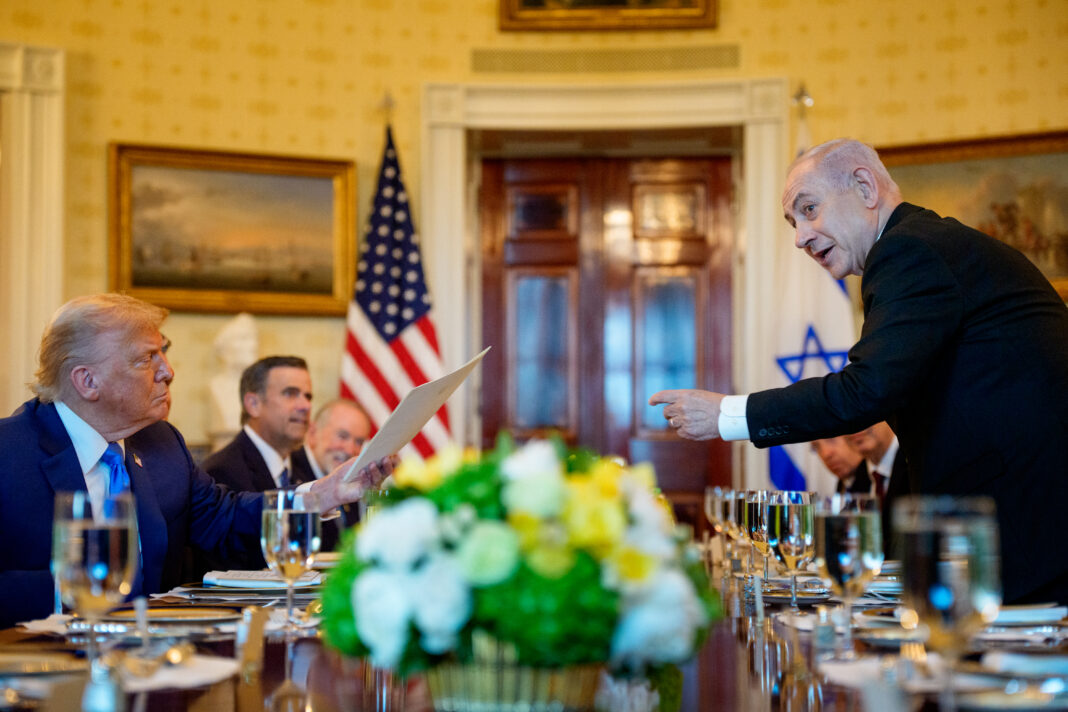 Thủ Tướng Benjamin Netanyahu (phải) của Israel trao cho Tổng Thống Donald Trump lá thư mà ông gửi tới Ủy Ban Giải Nobel Hòa bình để đề cử ông Trump cho giải thưởng này tại Toà Bạch Ốc vào Tháng Bảy, 2025.
 "Hành vi của anh ta rất kỳ lạ. Anh ta hay thực hiện các nghi lễ tôn giáo không giống ai tại chỗ làm, cầu nguyện suốt ngày và từ chối bắt tay với phụ nữ".
Trang Sách Hiếm
| ©2012 |