|
Sách hiếm - cho đến khi được phổ biến ở các nơi mà "thánh kinh" có mặt. | |||||||||
|

|
| |||||||||
|
Tìm chữ | |||||||||
|
| |||||||||
|
| |||||||||
|
Chủ Trương | |||||||||
| Các đề mục : | |||||||||
» Lưu Trữ Theo Ngày Tháng | |||||||||
| » Các bài về Cải Đạo | |||||||||
| » Các Truyền Nhân Của Chúng Tôi | |||||||||
| » Chữ Quốc Ngữ | |||||||||
| » Hồ sơ CIA giải mật | |||||||||
| » Lạm dụng tình dục | |||||||||
| » GHLM: Lịch Sử và Hồ Sơ Tội Ác | |||||||||
| » Vài Danh Sách Cừu Đen | |||||||||
| » Ý Thức Văn Thân Thế Kỷ 21 | |||||||||
|
| |||||||||
| Các tác giả: | |||||||||
| Bùi Kha | |||||||||
| Charlie Nguyễn | |||||||||
| Hoàng Nguyên Nhuận | |||||||||
| Hoành Linh Đỗ Mậu | |||||||||
| Lý Thái Xuân | |||||||||
| Nguyễn Đắc Xuân | |||||||||
| Nguyễn Mạnh Quang | |||||||||
| Nguyễn Văn Thịnh | |||||||||
| Nguyễn Văn Thọ | |||||||||
| Thiên Lôi | |||||||||
| Trần Chung Ngọc | |||||||||
| Trần Tiên Long | |||||||||
| Trần Trọng Sỹ | |||||||||
| Các tác giả thân hữu | |||||||||
| |||||||||
| |||||||||
|
| |||||||||
|
Các trang bạn | |||||||||
|
▬ Các kênh Youtubes: ▬ Các Facebooks: ▬ Các websites: | |||||||||
|
LHQ không cho phép Mỹ xâm chiếm Triều Tiên
Subject: ***_Kim_Jong_Un_nói_ cứng, làm_bạo_-_vì_Nga_và_TQ không_cho_phép Mỹ_xâm_lăng_TT (!)
From: Mike Wilson
Date: Sat, September 23, 2017 10:41 am
LHQ không cho phép Mỹ xâm chiếm Triều Tiên .
Nga và TQ đều có chung biên giới với TT - và cả hai đều không cho phép Mỹ đem quân vào TT.
TQ đã nói rồi, nếu TT không đánh trước, mà Mỹ xâm lược TT, thì TQ sẽ bảo vệ lợi ích của TQ tại bán đảo này .
Hai bài bình luận dưới đây cho thấy tại sao Kim Jong Un dám thách đố Donald J. Trump :
Con bài tẩy của Kim Jong Un là Nga và TQ sẽ không cho phép Mỹ có chiến thắng quân sự và chiếm đóng TT - cũng như Nga không cho phép Mỹ chiến thắng tại Syria !
nth-fl
--------------------------
Russia: U.S. War With North Korea "Is Not an Option"
One of Russia's highest-ranking diplomats warned Thursday that a U.S. attack on North Korea would have serious repercussions across the globe and stressed his country's opposition to such a move. He wasn't alone.
Russian Deputy Foreign Minister Gennady Gatilov and officials from multiple countries around the world are rejecting President Donald Trump's promise Wednesday to "totally destroy" North Korea. Trump's fiery U.N. speech came after months of mounting tensions between his administration and an increasingly bellicose, nuclear-capable North Korea, led by Kim Jong Un. While Russia has also criticized Kim's nuclear ambitions and routine ballistic missile tests, Gatilov emphasized that Moscow would not stand for a direct U.S. assault on North Korea—something Trump's administration has repeatedly touted as a possibility.
"This is their long-running thesis that all options remain on the table, including military ones. But we believe this will have dire consequences both for North and South Korea, and the region in general, and for all international relations in general. This is not an option," Gatilov told the state-run Tass Russian News Agency, adding that he believed Washington should be savvy enough to know not to launch such a bold move.
"Still, common sense should prevail here. We should think not about military methods but how to start talks and dialogue," he said.
Russia wasn't the only country frustrated by the rhetoric of Trump's first U.N. General Assembly address, in which he called Kim a "Rocket Man" who is "on a suicide mission for himself and for his regime." Representatives of North Korea, the target of the Republican leader's attacks, had walked out of the room prior to Trump's threats, but the country's foreign minister, Ri Yong Ho, later likened the speech to "dog-barking sounds" that did not surprise Pyongyang.
Like previous U.S. leaders, Trump has rejected North Korea's self-proclaimed right to possess nuclear weapons, which the country (N. Korea) argues are crucial for guarding the reclusive, communist state's sovereignty. Since conducting its first nuclear test in 2006, North Korea's military has advanced rapidly, especially after Kim became the third generation of his family to lead the country following his father's death in 2011.
This year alone, North Korea launched its first ever intercontinental ballistic missile (ICBM) tests and its sixth nuclear test, believed to have been a hydrogen bomb more powerful than all previous tests combined. These developments, along with reports that North Korea has potentially achieved the technology to fit warheads onto its missiles, could place much of the world, including parts of the U.S., in Kim's scope.
--> Most popular: Kim Jong Un Says Trump Is "Mentally Deranged" and Needs To Be Tamed With "Fire"
A war between the U.S. and North Korea has been projected as killing at least a million people—without the use of nuclear weapons. The fatalities would increase significantly if North Korea were to successfully launch a nuclear strike on the U.S., which it has promised to do if attacked. As tensions between Trump and Kim mount, some U.S. allies and foes alike have attempted to step in to defuse the situation.
Swedish Foreign Minister Margot Wallstrom called Trump's U.N. address "the wrong speech, at the wrong time, to the wrong audience," and German Foreign Minister Sigmar Gabriel warned last month that a war between the U.S. and North Korea "could result in more victims than World War II," which would make it the deadliest conflict in human history.
China, North Korea's closest ally since its founding and during subsequent conflict with its U.S.-backed southern neighbor in the 1950s, has joined forces with Russia in trying to establish a peaceful resolution to the crisis. The countries, both traditional critics of U.S. foreign policy, have called on Trump and Kim to renounce their current brinkmanship and engage one another in dialogue.
Pacific U.S. allies South Korea and Japan (American running dogs ! nth-fl), however, have mostly welcomed Trump's hardline tactics. A South Korean presidential spokesperson, Park Soo-hyun, praised Trump's "firm and specific stance regarding the important issue of maintaining peace and security now facing the international community and the United Nations," according to The Washington Post.
_______
Beijing might be compelled to act militarily if Pyongyang was attacked or collapsed on its own. Over the past f...
Why China Could Invade North Korea
The National Interest John Dale Grover,The National Interest
Thu, Sep 21 7:37 PM EDT
John Dale Grover
The degree of China’s loyalty to North Korea is a good question. But it is better to ask what China would do if its core national interests were threatened and there was no trusted plan in place among Beijing, Washington and Seoul that addressed its concerns.
The first and most intuitive concern for China would be to contain the flow of North Korean refugees that would spill across the border. North Korea is a fragile state home to over twenty-five million people, many of whom have been living under conditions of extreme starvation, poverty, oppression and brainwashing. In the past, Beijing has had to deal with an influx of around two hundred thousand North Korean refugees. More recently, it has increased its border patrols and fences, often cooperating with North Korean authorities in trying to find and forcibly repatriate escapees. A war would likely kill hundreds of thousands to millions, which would increase large-scale flight.
What a War Between America and China Would Look Like?
From China’s point of view, refugees would become a nightmare of vast humanitarian demands requiring immense resources in food, shelter and medical attention. A sudden flood of refugees who do not speak Chinese into China’s industrial northeast would create strains on local governments and markets, causing unrest or ethnic strife. This means that at the least, China would likely create a military buffer zone to manage or stop refugees. Alternatively, it could also occupy part or all of the DPRK to keep North Koreans in their own country. Either way, China has trained its military for such operations.
Another problem Beijing faces is the question of who would take control of North Korea’s nuclear weapons if the government collapsed. This is something U.S. policymakers have long worried about and is another reason for why military action is risky. One of the problems is that it is difficult to discern whether every nuclear site in North Korea is known, mapped and able to be destroyed or captured quickly since many of the country’s facilities are underground and many missiles are on mobile launchers. Given that most of North Korea’s nuclear sites are located along the Chinese border, the necessity (for China) to act also increases in the face of possible U.S. intervention.
The location of Kim’s nuclear sites is alarming for China since it means that if the United States ever wanted to take out his nuclear capabilities, then U.S. troops would have to cross the thirty-eighth parallel and approach the Yalu River. Needless to say, countries do not like the forces of other powers on their borders. During the Korean War, Beijing came to North Korea’s aid largely to protect itself from the possibility of U.S. forces marching into China. After Beijing entered the war, Gen. Douglas MacArthur actively argued that America should have invaded, and even called for the use of nuclear weapons. In addition to the sensitive legacy of the Korean War, China has a long history of intervening in Korea when foreign powers have come too close to their borders. It would be highly out of character for Beijing to react to U.S. forces near the Yalu River in a nonmilitary fashion.
During off-the-record interviews with U.S. researchers, several high-level Chinese military and government officials have made it clear that if the crisis was dire enough, Beijing would most certainly intervene—either to annex North Korea or to prop up a new puppet state. A Chinese intervention into North Korea carries many risks and is therefore an option of last resort. If Beijing decides to send in Chinese forces, they will do so in a way that tries to minimize the cost. It is important to note that interventions can come in many forms, but in all of them China’s goals remain same.
If North Korea ever collapsed, an intervention would be framed as a humanitarian and stabilization mission. One can expect an attempt to gain UN Security Council approval along those lines from China's ambassador at the same moment as the first Chinese units roll across the border. Diplomatic maneuvers in the UN could also be used to veto any United States or South Korean resolutions in favor of their own intervention or reunification. In a scenario where North Korea is attacked, China would intervene as an ally and to save face domestically. Alternatively, if North Korea attacked America or South Korea first, then China would still intervene, but in a more limited fashion. Beijing knows a war of choice on the side of the aggressor would not be worth the price, and so China has made it clear that it would not come to North Korea’s aid if Kim started a war. Therefore, Beijing will still act, but it will instruct its forces to avoid American and South Korean forces and will signal to the United States that it wants to secure its border, not to fight.
Given all of these things, it is critical that any conversations between Washington, Beijing and Seoul address each other’s concerns and each scenario. Given how unstable the North Korean crisis is, it would be wise for the United States, China and South Korea to have a joint plan ahead of time about what to do. Coordination and communication during a fast-paced collapse or outbreak of hostilities would be necessary to avoid confusion that could draw China into a direct war with the United States and South Korea.
Currently, no such agreement, at least publicly, exists on how to handle North Korea or what the end-goal of any conflict would be. The anger from China’s officials and pressure on Kim will help start private conversations, but such talks will be fraught with difficulty. The topic of coordination with America or South Korea is still taboo for many in the Chinese military, and some worry about privacy as leaks may cause it to look like Beijing is backstabbing its ally.
Despite this, to prevent the situation from ever getting out of hand, leaders of each country have to understand each other’s interests and try to reach an agreement. Without a plan and without sufficient communication, security concerns and uncertainty will push the United States, China and South Korea to each act unilaterally in pursuit of their own interests. For China that means it cannot rule out a decision to intervene militarily and Washington must take that seriously.
________
John Dale Grover is a graduate student at George Mason University’s School of Conflict Analysis and Resolution and a former Nonresident Young Leaders Fellow at the Center for the National Interest. His articles have appeared in Forbes Magazine, Real Clear Defense, the Eurasia Review, and other outlets.

| Đó đây |
|
2026-10-22 - Tạm giữ nam sinh hành hung cô giáo ngay trong lớp học ở Hà Nội - VTV.vn - Liên quan đến vụ nam sinh hành hung cô giáo ngay trong lớp học tại Hà Nội, cơ quan công an đã tạm giữ nam sinh để phục vụ công tác điều tra, làm rõ vụ việc.
2026-10-19 - NÓNG 19-10-26: ĐÃ ĐẾN LÚC DỪNG CÂU CHUYỆN CỦA HOÀNG DUY HÙNG LẠI NẾU KHÔNG HẬU QUẢ KHÔN LƯỜNG - 2026-10-19 - Chúa trên thập tự ngã xuống đập vào đầu 1 linh mục đang làm lễ - LM Công giáo Patricio Alfredo Sánchez Molinari đã tử vong vào thứ Bảy, ngày 18 tháng 10 năm 2026, khi một cây thánh giá bằng gỗ lớn đổ ập vào đầu ngài trong một buổi Thánh lễ được phát trực tuyến 2026-10-11 - Toàn cảnh vụ thảm án khiến ba mẹ con tử vong ở Đồng Nai - Sau khi chia tay, Nguyễn Đức Anh mang dao tìm đến nhà người yêu cũ để trả thù. Không vào được nhà, Đức Anh trèo sang tấn công gia đình hàng xóm khiến 3 người tử vong, 1 người bị thương nặng.
2026-10-10 - Chào mừng giải phóng Thủ đô: Đại tiệc pháo hoa nghệ thuật và trải nghiệm đỉnh cao - Hướng tới kỷ niệm 72 năm Ngày Giải phóng Thủ đô (10/10/1954 – 10/10/2026), Hà Nội sẽ trở thành tâm điểm rực rỡ với chuỗi hoạt động văn hóa, nghệ thuật, thể thao và du lịch quy mô lớn.
2026-10-10 - Mãn nhãn với màn pháo hoa lộng lẫy mừng 72 năm Giải phóng Thủ đô - Pháo hoa rực rỡ sắc màu đã thắp sáng bầu trời Hà Nội trong đêm 10/10, thu hút đông đảo người dân tới chiêm ngưỡng.
2026-10-10 - Trump trừng phạt Tòa Hình Sự Quốc Tế sau khi cựu chánh án đoạt Nobel Hòa Bình - Ngoại Trưởng Marco Rubio tuyên bố Mỹ sẽ ngăn cấm giao dịch với ICC, cắt nguồn lực và hạn chế khả năng hoạt động của tòa nhằm bảo vệ công dân Mỹ trước những cuộc truy tố
2026-10-06 - Nữ tử tù sống lại sau 2 lần tiêm thuốc độc: Tiếng ngáy khiến cả nhà tù hỗn loạn - 2026-10-03 - Một thảm họa hàng không xém đã xảy ra vì "cơ phó" được nhận xét là cuồng tín - Cơ phó người Oman của hãng hàng không Flydubai đã dùng hung khí tấn công cơ trưởng nhằm giành quyền kiểm soát buồng lái khi đang trong chuyến bay sáng 30/9 từ Dubai, (UAE) đến Tel Aviv, Israel.
2026-10-03 - Giờ mới biết cô Linh Trần là ai! -
|
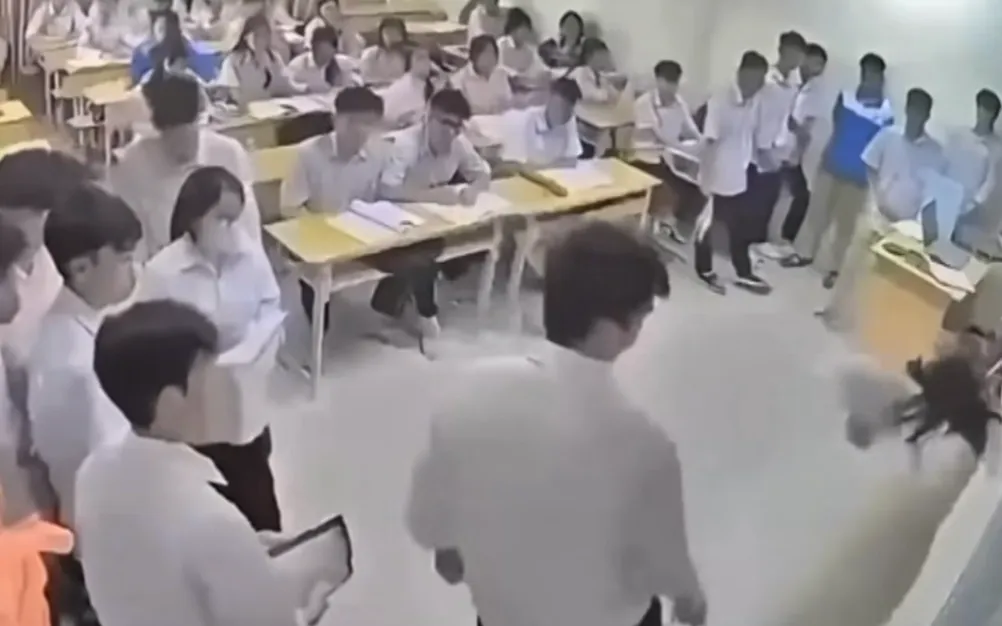 Theo đó, nam sinh này cùng một số học sinh khác không làm bài tập về nhà nên bị cô giáo nhắc nhở và yêu cầu đứng lên. Trong quá trình này, nam sinh mất bình tĩnh, dẫn đến hành vi hành hung cô giáo.

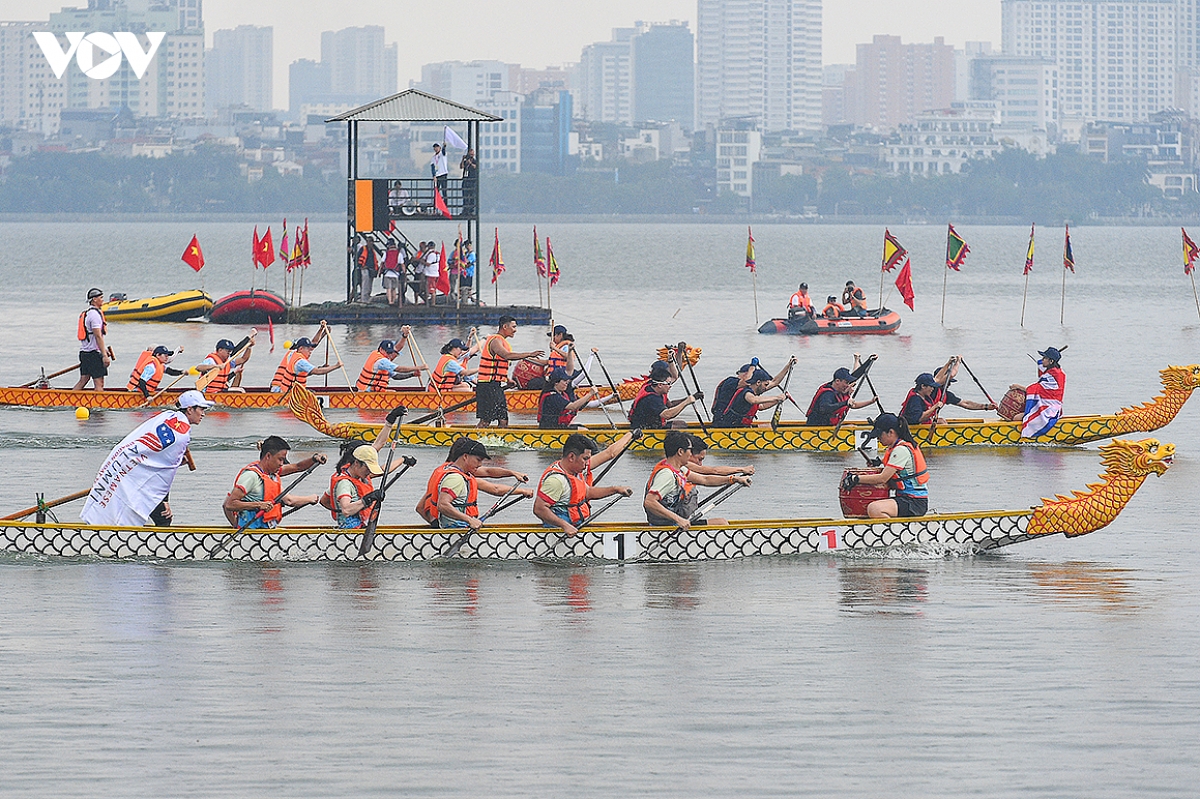 Điểm nhấn được chờ đợi là màn trình diễn pháo hoa nghệ thuật tầm cao kết hợp âm nhạc bùng nổ vào đêm 10/10

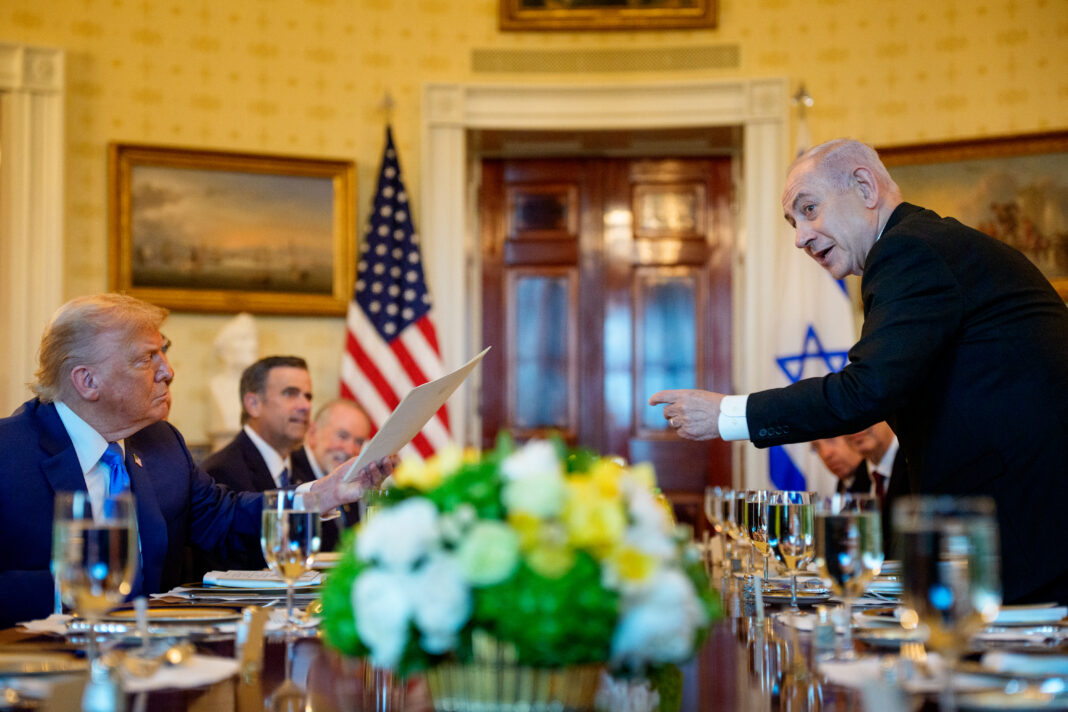 Thủ Tướng Benjamin Netanyahu (phải) của Israel trao cho Tổng Thống Donald Trump lá thư mà ông gửi tới Ủy Ban Giải Nobel Hòa bình để đề cử ông Trump cho giải thưởng này tại Toà Bạch Ốc vào Tháng Bảy, 2025.
 "Hành vi của anh ta rất kỳ lạ. Anh ta hay thực hiện các nghi lễ tôn giáo không giống ai tại chỗ làm, cầu nguyện suốt ngày và từ chối bắt tay với phụ nữ".
Trang Sách Hiếm
| ©2012 |