|
Sách hiếm - cho đến khi được phổ biến ở các nơi mà "thánh kinh" có mặt. | |||||||||||
|

|
| |||||||||
|
Tìm chữ | |||||||||
|
| |||||||||
| | |||||||||
|
Chủ Trương | |||||||||
| Các đề mục : | |||||||||
» Lưu Trữ Theo Ngày Tháng | |||||||||
| » Các bài về Cải Đạo | |||||||||
| » Các Truyền Nhân Của Chúng Tôi | |||||||||
| » Chữ Quốc Ngữ | |||||||||
| » Hồ sơ CIA giải mật | |||||||||
| » Lạm dụng tình dục | |||||||||
| » GHLM: Lịch Sử và Hồ Sơ Tội Ác | |||||||||
| » Vài Danh Sách Cừu Đen | |||||||||
| » Ý Thức Văn Thân Thế Kỷ 21 | |||||||||
|
| |||||||||
| Các tác giả: | |||||||||
| Bùi Kha | |||||||||
| Charlie Nguyễn | |||||||||
| Hoàng Nguyên Nhuận | |||||||||
| Hoành Linh Đỗ Mậu | |||||||||
| Lý Thái Xuân | |||||||||
| Nguyễn Đắc Xuân | |||||||||
| Nguyễn Mạnh Quang | |||||||||
| Nguyễn Văn Thịnh | |||||||||
| Nguyễn Văn Thọ | |||||||||
| Thiên Lôi | |||||||||
| Trần Chung Ngọc | |||||||||
| Trần Tiên Long | |||||||||
| Trần Trọng Sỹ | |||||||||
| Các tác giả thân hữu | |||||||||
| |||||||||
| |||||||||
|
| |||||||||
|
Các trang bạn | |||||||||
|
▬ Các kênh Youtubes: ▬ Các Facebooks: ▬ Các websites: | |||||||||
|
website hit counter
|
Chính Trị Cực Đoan Và Vấn Nạn Lãnh Đạo Của Mỹ
Subject: *** do đâu mà có đám bất tài trong đảng Cộng Hòa Mỹ?
From: "Mike Wilson"
Date: 10/16/15 8:36 am
CHÍNH TRỊ CỰC ĐOAN VÀ VẤN NẠN LÃNH ĐẠO CỦA MỸ :
1. Lãnh đạo là phải có tầm nhìn tổng thể, sâu sát thực tại, không chỉ nông cạn bề ngoài .
2. Lãnh đạo là phải biết tương nhượng thỏa hiệp, điều phối các lợi ích nhóm, sao cho phân bố hiệu quả lợi ích tổng thể của quốc dân !
3. Mọi phương án, đề xuất, sửa sai chính sách, v.v. đều phải tôn trong hai nguyên tắc trên.
4. Phải tôn trọng qui trình hệ thống lãnh đạo - không được làm rối loạn kỷ cương lãnh đạo !
5. Đám Cộng Hòa Hạ Viện cực đoan đang làm rối loạn kỷ cương Hạ Viện Mỹ, đẩy nhà nước Mỹ vào thế bí của lãnh đạo!
6. Tiến trình tranh giành quyền lực chính trị Mỹ dựa vào tiền ủng hộ tranh cử và tuyên truyền của truyền thông:
7. Do đó các ứng viên sau khi đắc cử phải mị dân làm theo ý những kẻ đã cho tiền mình,
- chứ không làm theo ý của lãnh đạo đảng !
8. Cái gọi là "tự do" chính trị Mỹ chính là tự do chia rẽ, phân hóa, tranh quyền sao cho lợi ích nhóm, lợi ích giai cấp được tối đa
- bất kể đến lợi ích tổng thể của quốc dân !
9. Chính vì vậy mà 3 nguyên tắc đầu tiên không được tôn trọng, dẫn đến hỏng hóc và đổ vỡ tiến trình lãnh đạo chính trị Mỹ !
______________
Dưới đây là bài viết của David Brooks, nhà bình luận chính trị nổi tiếng của tờ New York Times.
nth-fl
https://www.nytimes.com/2015/10/13/opinion/the-republicans-incompetence-caucus.html?_r=0
The Republicans’ Incompetence Caucus
OCT. 13, 2015
THE NEW YORK TIMES
The House Republican caucus is close to ungovernable these days. How did this situation come about?
This was not just the work of the Freedom Caucus or Ted Cruz or one month’s activity. The Republican Party’s capacity for effective self-governance degraded slowly, over the course of a long chain of rhetorical excesses, mental corruptions and philosophical betrayals. Basically, the party abandoned traditional conservatism for right-wing radicalism. Republicans came to see themselves as insurgents and revolutionaries, and every revolution tends toward anarchy and ends up devouring its own.
By traditional definitions, conservatism stands for intellectual humility, a belief in steady, incremental change, a preference for reform rather than revolution, a respect for hierarchy, precedence, balance and order, and a tone of voice that is prudent, measured and responsible. Conservatives of this disposition can be dull, but they know how to nurture and run institutions. They also see the nation as one organic whole. Citizens may fall into different classes and political factions, but they are still joined by chains of affection that command ultimate loyalty and love.
All of this has been overturned in dangerous parts of the Republican Party. Over the past 30 years, or at least since Rush Limbaugh came on the scene, the Republican rhetorical tone has grown ever more bombastic, hyperbolic and imbalanced. Public figures are prisoners of their own prose styles, and Republicans from Newt Gingrich through Ben Carson have become addicted to a crisis mentality. Civilization was always on the brink of collapse. Every (Republican) setback, like the passage of Obamacare, became the ruination of the republic. Comparisons to Nazi Germany became a staple.
This produced a radical mind-set. Conservatives started talking about the Reagan “revolution,” the Gingrich “revolution.” Among people too ill educated to understand the different spheres, political practitioners adopted the mental habits of the entrepreneur. Everything had to be transformational and disruptive. Hierarchy and authority were equated with injustice. Self-expression became more valued than self-restraint and coalition building. A contempt for politics infested the Republican mind.
Politics is the process of making decisions amid diverse opinions. It involves conversation, calm deliberation, self-discipline, the capacity to listen to other points of view and balance valid but competing ideas and interests.
But this new Republican faction regards the messy business of politics as soiled and impure. Compromise is corruption. Inconvenient facts are ignored. Countrymen with different views are regarded as aliens. Political identity became a sort of ethnic identity, and any compromise was regarded as a blood betrayal.
A weird contradictory mentality replaced traditional conservatism. Republican radicals have contempt for politics, but they still believe that transformational political change can rescue the nation. Republicans developed a contempt for Washington and government, but they elected leaders who made the most lavish promises imaginable. Government would be reduced by a quarter! Shutdowns would happen! The nation would be saved by transformational change! As Steven Bilakovics writes in his book “Democracy Without Politics,” “even as we expect ever less of democracy we apparently expect ever more from democracy.”
This anti-political political ethos produced elected leaders of jaw-dropping incompetence. Running a government is a craft, like carpentry. But the new Republican officials did not believe in government and so did not respect its traditions, its disciplines and its craftsmanship. They do not accept the hierarchical structures of authority inherent in political activity.
In his masterwork, “Politics as a Vocation,” Max Weber argues that the pre-eminent qualities for a politician are passion, a feeling of responsibility and a sense of proportion. A politician needs warm passion to impel action but a cool sense of responsibility and proportion to make careful decisions in a complex landscape.
If a politician lacks the quality of detachment — the ability to let the difficult facts of reality work their way into the mind — then, Weber argues, the politician ends up striving for the “boastful but entirely empty gesture.” His work “leads nowhere and is senseless.”
Welcome to Ted Cruz, Donald Trump and the Freedom Caucus.
Really, have we ever seen bumbling on this scale, people at once so cynical and so naïve, so willfully ignorant in using levers of power to produce some tangible if incremental good? These insurgents can’t even acknowledge democracy’s legitimacy — if you can’t persuade a majority of your colleagues, maybe you should accept their position. You might be wrong!
People who don’t accept democracy will be bad at conversation. They won’t respect tradition, institutions or precedent. These figures are masters at destruction but incompetent at construction.
These insurgents are incompetent at governing and unwilling to be governed. But they are not a spontaneous growth. It took a thousand small betrayals of conservatism to get to the dysfunction we see all around.
| Đó đây |
|
2026-01-15 - Thời sự thế giới 15/1: Nga - Mỹ đã chốt, Ukraine ngỡ ngàng; Ông Zelensky ban bố tình trạng khẩn cấp - 2026-01-15 - Tổng thống Mỹ ca ngợi lãnh đạo lâm thời Venezuela "tuyệt vời" - "Chúng tôi vừa có cuộc nói chuyện rất tốt, bà ấy là người tuyệt vời", Tổng thống Mỹ Donald Trump nói với phóng viên tại Nhà Trắng ngày 14/1 khi thông báo về cuộc điện đàm với
2026-01-14 - Ông Vương Tấn Việt, trụ trì chùa Phật Quang kiện đòi hơn 71.000 m2 đất - (NLĐO)- Ký vào biên bản bàn giao đất cho các tăng ni chùa Phật Quang nhưng sau đó cho rằng bị ép buộc nên ông Vương Tấn Việt đã khởi kiện ra tòa để đòi lại! (Chùa Phật Quang do ông Thích Chân Quang làm trụ trì có 35 công trình xây dựng không phép)
2026-01-13 - Đức Trinh Nữ Maria KHÔNG phải là Đấng Đồng Cứu Chuộc! Giáo hoàng Leo và Tòa thánh Vatican vừa vạch ra một ranh giới rà - 2026-01-11 - TPHCM: Tranh chấp tài sản chung, "bỏ quên" vai trò cộng đồng! - TP Hồ Chí Minh vừa xét xử phúc thẩm vụ “tranh chấp đòi lại tài sản là quyền sử dụng đất” giữa ông Vương Tấn Việt và một số bị đơn tại xã Châu Pha, TP HCM, đã khép lại bằng phán quyết buộc giao trả 71.763m² đất cho nguyên đơn.
2026-01-09 - Đưa tác phẩm "Nỗi Buồn Chiến Tranh" ra khỏi danh sách bình chọn 50 tác phẩm văn học, - Ngày 07/01/2026, Bộ Văn hóa, Thể thao và Du lịch nhận được Thư của nhà văn Bảo Ninh. Bộ đã giao cho các đơn vị chức năng của Bộ gặp gỡ, trao đổi, lắng nghe ý kiến của nhà văn Bảo Ninh 2026-01-07 - Nội dung bạn đang xem đến từ website gdptangiang.vn - Thật bất ngờ, người này nói Phật giáo Việt Nam (PGVN) có năm ưu điểm căn bản mà đạo Thiên Chúa ở Việt Nam không có được.
2026-01-07 - THÍCH CHÂN QUANG - TỪ VINH QUANG ĐẾN SỤP ĐỔ - TỨ ĐẠI MA TĂNG - 2026-01-06 - THÍCH CHÂN QUANG - TỪ VINH QUANG ĐẾN SỤP ĐỔ - TỨ ĐẠI MA TĂNG - 2026-01-06 - Chỉ có các "cá nhân" thuộc Thiên Chúa Giáo La mã ủng hộ việc Mỹ làm ở Venezuela! -
|
 Tổng thống lâm thời Venezuela Delcy Rodriguez. Đây dường như là lần đầu tiên lãnh đạo Mỹ và Venezuela đối thoại trực tiếp sau vụ Washington tiến hành chiến dịch tập kích,
  Theo trình bày của nguyên đơn, việc ký kết này diễn ra trong bối cảnh bị ép buộc; đồng thời các bị đơn đã lấy đi 4 giấy chứng nhận quyền sử dụng đất (sổ đỏ) đứng tên ông Việt....
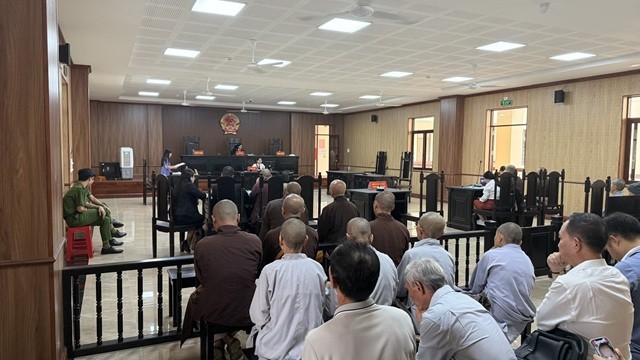 Một trong những điểm gây tranh cãi gay gắt nhất trong vụ án tranh chấp gần 72.000m² là: mảnh đất đó thực sự là tài sản cá nhân hay tài sản hình thành từ sinh hoạt tôn giáo, công sức cộng đồng?
 Văn bản số 290/TB.CAT(PV24) ngày 08/11/2010 của Công an tỉnh Bà Rịa – Vũng Tàu (cũ) từng xác định: “Số tài sản mà nhóm tu sĩ mang đi là tài sản chung của chùa do bá tánh đóng góp… các tu sĩ đều là thành viên của chùa…”
 1 Ưu điểm thứ nhất: độc lập, thuần túy, tự lập, ngay thẳng
2 Ưu điểm thứ hai: tu sĩ PGVN sống đạo đức
3 Ưu điểm thứ ba: PGVN không bị thế lực bên ngoài chi phối
4 Ưu điểm thứ tư: PGVN không cấu kết với ngoại bang để làm tổn hại đất nước và nhân dân mình
5 Ưu điểm thứ năm: PGVN không có chủ trương "đặt thần quyền lên trên thế quyền".
1 Ưu điểm thứ nhất: độc lập, thuần túy, tự lập, ngay thẳng
2 Ưu điểm thứ hai: tu sĩ PGVN sống đạo đức
3 Ưu điểm thứ ba: PGVN không bị thế lực bên ngoài chi phối
4 Ưu điểm thứ tư: PGVN không cấu kết với ngoại bang để làm tổn hại đất nước và nhân dân mình
5 Ưu điểm thứ năm: PGVN không có chủ trương "đặt thần quyền lên trên thế quyền".
Trang Sách Hiếm
| ©2012 |