 |
17 tháng 4, 2011 |
Tờ
VIETNAM Magazine ra đời từ năm 1988, mỗi 2 tháng ra một số. Đây là tờ
báo duy nhất xuất bản bởi các cựu chiến binh Mỹ đã phục vụ trong cuộc
chiến ở Việt Nam để “đi tìm một chìa khoá giải tỏa những bí ẩn của
cuộc chiến tranh” đầu tiên mà nước Mỹ đã không toàn thắng. Đa số
những bài vở trong VIETNAM do các cựu chiến binh Mỹ đóng góp thường kể
lại những kinh nghiệm oai hùng và những nhân vật anh dũng trong các trận
chiến ở Việt Nam theo tinh thần câu nói của cựu Bộ trưởng Quốc phòng
McNamara với cựu Đại tướng Võ Nguyên Giáp: “Các ông đã thắng cuộc chiến
nhưng chúng tôi đã thắng hầu hết các trận chiến”.
Đặc biệt số tháng 4/2011 của tờ VIETNAM có đăng hai bài báo đáng cho
người Việt Nam chú ý. Đáng chú ý là vì hai bài nầy kể lại hai câu chuyện
trong cao điểm của thời chiến nhưng đã thực chứng được sức mạnh của tình
người dù trong hoàn cảnh nào cũng có thể vượt lên trên tất cả để chỉ còn
lại người với người. Không quân phục, không vũ khí, không huy chương,
không ý thức hệ, không chủ nghĩa, không son, không phấn. Chỉ có người
trực diện với người.
Bài thứ nhất
ở trang 32 có tựa là “The Night The Viet Cong Stopped the War”
(“Đêm Việt Cọng Ngừng Chiến”) của tác giả Bob Worthington, một cựu Đại
úy cố vấn cho Tiểu Đoàn 3 của Trung Đoàn 51 Bộ Binh, Quân Lực Việt Nam
Cộng Hòa đang đóng tại làng An Hoà phía Nam tỉnh Quảng Ngãi. Ông cũng là
một người thích quay phim nên đã kèm theo bài báo những hình ảnh sống
động cho câu chuyện khó tin của ông.
Câu chuyện khởi đầu vào một ngày cuối tháng 12 năm 1966, ông được lệnh
đi theo Tiểu Đoàn 3 Bộ Binh, mà ông coi là thiện chiến, do Thiếu tá Đoàn
T. Vân chỉ huy để thực hiện một loại hành quân gọi là “County Fair”
(hỗn hợp quân đội, cảnh sát và dân vận để vừa quét sạch các phần tử Việt
Cọng (VC) vừa tuyên truyền cho dân theo chính phủ qua các phương tiện
thông tin, văn nghệ, y tế, giáo dục) tại làng Phú Nhuận, cách An Hoà
khoảng 3 dặm phía Đông Bắc. Trên đường hành quân vào làng Phú Nhuận đã
có chạm trán nhẹ với kết qủa địch chết 2 và phe ta vô sự. Sau khi vào
đến trung tâm làng và thiết lập bộ chỉ huy, Thiếu tá Vân ra lệnh rải
quân để kiểm soát các ngõ ra vào làng và bắt đầu chương trình dân vận
bên cạnh công tác lùng soát các cán bộ VC nằm vùng.
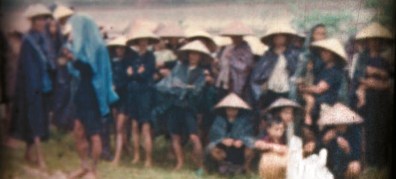
Chiến dịch County Fair
https://www.historynet.com/the-night-the-viet-cong-stopped-the-war.htm
Khi màn đêm buông xuống, VC từ phía ruộng đối diện làng bắt đầu bắn vào
làng càng lúc càng kịch liệt đến mức phe ta phải kêu trọng pháo bắn yểm
trợ. Trong khi hai bên đang giao tranh thì một ông già xin gặp Thiếu tá
Tiểu Đoàn Trưởng để cho biết là ông ta đến từ trong vùng VC đang chiếm
đóng trước mặt và ở đó có một bé gái bị thương nặng cần cứu chữa tức
thì. Điều bất ngờ là ông ta cho biết nếu quân Mỹ đem trực thăng đến tải
thương cho cô bé nầy thì bên VC sẽ ngừng bắn. Thiếu tá Vân hỏi ý kiến
Đại úy Worthington. Ông nầy bảo ông già đem đứa bé đến cho y tá Mỹ khám.
Ông già biến vào đêm tối rồi trở lại với một người đàn bà trẻ tuổi cầm
một giỏ tre. Đại úy Worthington vén cái mền rách trong giỏ thì thấy một
bé gái khoảng một tuổi nằm im lặng với hai chân bị đạn phá nát. Phản ứng
của người sĩ quan Mỹ là: “Đối diện với họng súng của kẻ thù đang lăm
le giết tôi là một chuyện mà tôi đã chuẩn bị. Nhưng đối diện với một đứa
bé con mà số mạng bất hạnh của nó là bị sinh ra trong vùng lửa đạn đã
làm cho tôi chới với. Tôi nhìn vết thương khủng khiếp của đứa bé và
người mẹ đáng thương rồi liên tưởng ngay đến chính vợ tôi và hai đứa con
gái nhỏ của tôi.”
Người y tá gỡ bỏ những mãnh đạn và băng bó để cầm máu nhưng cho biết vết
thương trong gân và cơ bắp cần được giải phẩu càng sớm càng tốt. Mặc dù
tràn đầy nghi ngại, Đại úy Worthington bàn với Thiếu tá Vân là sẽ gọi
trực thăng nhưng cần chuẩn bị một bãi đáp an toàn. Kinh nghiệm những lần
phản bội lời hứa của VC trong các lần ngưng chiến trước đây cũng không
ngăn được nguời Đại úy Mỹ bước ra bãi đáp, một mãnh đất trống giữa làng
và vùng VC chiếm đóng, để chờ trực thăng đến. Trong đêm tối, tiếng súng
đã tắt hẵn, Đại uý Worthington liên lạc vô tuyến với người phi công trực
thăng đang bay đến từ căn cứ. “Tiger 3 … Anh có chắc là VC sẽ không
bắn vào máy bay của tôi?” “- “Charlie 7, đó là điều VC đã nói với tôi.
Tôi nghĩ là chúng ta chỉ có thể chờ rồi mới biết.”
Rồi trực thăng đến trong tiếng cánh quạt xoành xoạch. Chạm đất. Người mẹ
ôm cái giỏ chạy ra. Đại úy Worthington nâng người mẹ lên sàn máy bay.
Trực thăng nghiêng mình cất cánh. Tất cả xãy ra trong một phút. Tiếng
xoành xoạch xa dần trả lại sự im lặng không một tiếng súng trên bãi đáp
đen như mực. Người Đại úy Mỹ bước chầm chậm trở lại bộ chỉ huy trong
làng Phú Nhuận, “ông dỡ nón sắt ngưỡng mặt nhìn lên bầu trời, để cho
những giọt mưa rơi nhẹ nhàng rửa sạch mồ hôi trên trán, chảy vào mắt rồi
tuôn ra trên má.”
Khoảng một giờ sau, tiếng súng lại bắt đầu nổ từ phía ruộng VC chiếm
đóng. Nhưng không có gì đáng kể. Ngày hôm sau, Tiểu Đoàn 3 rút chốt khỏi
làng Phú Nhuận kéo quân trở về bản doanh ở An Hoà đem theo 23 tình nghi
VC. Và cuộc chiến tiếp diễn trong dã man và khốc liệt mà loài người đã
quen thuộc.
Sau 15 năm trong quân ngũ, Đại úy Bob Worthington trở về Mỹ ghi tên học
lấy bằng Tiến sĩ về Tâm lý học rồi gĩa từ vũ khí năm 1981 với cấp bậc
Trung tá.
*
* *
Bài thứ hai
ở trang 16 có tựa là “Larry Colburn: Why My Lai, Hugh Thompson matter”
(Larry Colburn: Vì sao phải quan tâm về vụ Mỹ Lai và Hugh Thompson). Đây
là một bài phỏng vấn Larry Colburn nhìn từ một góc độ ít được nói đến.
Trong vụ thảm sát Mỹ Lai tháng 3 năm 1968, Colburn là một xạ thủ trên
một trực thăng thám báo.của Không đoàn 123 mà Hugh Thompson là phi công.
Vụ thảm sát đầu năm 1968 tại làng Mỹ Lai ở phía Nam Quảng Ngãi đã kết
thúc với 347 thường dân bị bắn chết (thống kê VNCH là 504 người) do lính
của Trung úy William Calley, chỉ huy trưởng Đại Đội 1 (Charlie Company)
thuộc Tiểu đoàn 1, Trung Đoàn 20, Lữ Đoàn 11, Sư Đoàn 23 Bộ Binh
(Americal Division). Hai năm sau khi vụ nầy bị báo chí phát giác, Trung
úy Calley đã bị toà án quân sự xử tù chung thân nhưng chỉ 4 tháng rưỡi
sau ông được trả tự do.
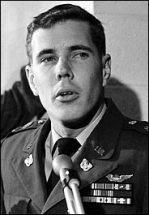
Hugh Thompson
Đây là một vết nhơ mà quân đội Mỹ không bao giờ rửa sạch nếu người ta
không tìm hiểu toàn bộ câu chuyện để biết được vai trò nhân bản tuyệt
vời của phi công Hugh Thompson và 2 chiến hữu Larry Colburn và Glenn
Andreotta trên chiếc trực thăng của họ. Như phim Rashomon của Kurosawa,
câu chuyện nầy cũng có ba cách nhìn. Và cách nào cũng trung thực. Cách
nhìn khủng khiếp thấy những người lính Mỹ tuân lệnh trên, bắn trực xạ
vào những thường dân Việt Nam gồm phần lớn là đàn bà và con nít không
may mắn sinh sống trong một ngôi làng bị bộ chỉ huy quân đội Mỹ nghi là
có VC ẩn nấp. Cách nhìn ghê tởm thấy một hệ thống hành chánh từ Tổng
thống Richard Nixon đến Chánh án Reid Kennedy của toà án quân sự tìm
cách bao che cho uy tín của nước Mỹ. Và cách nhìn hào hùng thấy có ba
người lính Mỹ tìm cách ngăn cản cuộc thảm sát trong tuyệt vọng với tinh
thần tôn trọng phẩm giá con người dù đó là một bà nhà quê trong một ngôi
làng nhỏ ở xa nước Mỹ văn minh đến nửa vòng cầu.
Dưới đây là bản phỏng dịch và tóm tắt một số câu phỏng vấn Larry
Colburn. Bản dịch và tóm tắt được chọn lựa để làm nổi bật bản chất con
người trong những hoàn cảnh khốc liệt nhất.
Khi Trung úy William Calley dẫn
quân vào làng Mỹ Lai thì anh đang ở đâu?
- Nhiệm vụ là thám báo nên khi đó trực thăng chúng tôi bay ở ngoài bià
làng và thấy dân chúng gồm đàn bà, con nít, người già đang đi ra khỏi
làng. Tôi nghĩ như vậy là tốt vì họ sẽ ở ngoài vòng nguy hiểm và chúng
tôi bay tiếp.
Khi nào thì anh thấy lại những
người dân làng nầy?
- Khoảng 15 phút sau, chúng tôi bay trở lại chỗ cũ thì thấy đám dân làng
đó nằm trên đất như đã chết hoặc bị thương. Chúng tôi bay thêm thì thấy
thêm những nhóm dân khác cũng nằm la liệt như vậy.
Khi nào thì anh hiểu được chuyện gì
đang xẩy ra?
- Phi công Hugh Thompson quăng 1 trái lựu đạn khói xuống bên cạnh một
người đàn bà bị thương ở ngực để làm dấu cho quân ta đến cứu thương.
Nhưng thay vì như vậy thì chúng tôi thấy Đại úy Medina bước đến sát
người đàn bà đang nằm. Đá vào người của bà ta rồi đưa súng bắn chết
người nầy. Cả ba chúng tôi đều la lên: “Đồ chó đẻ!”

Đó có phải là lúc mà phi công
Thompson không còn có thể ngần ngại?
- Đúng là khi chúng tôi thấy khoảng hơn 150 người đứng trong một cái
rãnh đối diện với một Trung sĩ. Phi công Thompson hạ trực thăng xuống và
chạy đến nói với người Trung sĩ: “Đó là thường dân, hãy giúp họ.” Người
Trung sĩ đồng ý và nói: “sẽ giúp họ giải thoát khỏi khốn khổ.” Sau khi
khi trực thăng của Thompson bay lên, người Trung sĩ đã bắn vào đám người
đó. Chúng tôi bay trở lại và thấy một toán quân đang tiến về một đám
thường dân khác đang núp trong một căn hầm. Thompson đáp trực thăng
xuống giữa hai nhóm người nầy và nhẩy xuống cố gắng thuyết phục người
Trung úy cầm đầu toán lính rằng đây chỉ là những thường dân. Người Trung
úy không đồng ý và vẫn tiến về đám thường dân. Thompson chạy trở lại
trực thăng và ra lệnh cho Andreotta và tôi: “Tôi sẽ trở lại đó và cố
gắng đưa những người dân đó ra khỏi hầm rồi chở họ ra khỏi chỗ nầy. Nếu
toán lính bắn vào những người dân hoặc bắn vào tôi thì hai anh hãy bắn
vào toán lính!” Thompson đã thực hiện được ý muốn và chúng tôi phải bay
2 lần để chở hơn 10 người dân núp trong hầm đó.
Anh có sẵn sàng để bắn vào các đồng
đội của anh?
- Tôi cũng không biết. Và tôi đã suy nghĩ mãi về điều nầy. Nhất là về
sau, khi tôi đã biết thêm được những cuộc hãm hiếp dã man … Dù vậy tôi
cũng không biết sẽ bắn hay không.
Sau đó, anh có nghĩ là anh có thể
làm hơn nữa?
- Chúng tôi trở lại chỗ cái rãnh có hơn 150 người và Andreotta tìm thấy
một đứa bé còn nhúc nhích trong đám xác người bất động. Chúng tôi chở
đứa nhỏ về nhà thương của căn cứ.
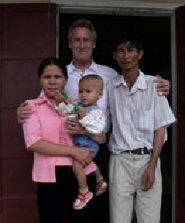
Trong
chuyến trở về Việt-Nam năm 2008, Larry Colburn đứng chụp hình chung với
gia đình Đỗ Hoà, đứa bé mà Thượng sĩ Glenn Andreotta kéo ra từ đám người
bị bắn chết ở Mỹ Lai và đem về cứu chữa ở nhà thương của căn cứ..
Sau khi trở lại căn cứ, chuyện gì
đã xẩy ra?
- Phi công Thompson rất giận dữ, ông nói: “Tôi sẽ không bao giờ bay nữa.
Tôi không đến đây để làm những chuyện như vậy. Tôi không dính gì đến
những chuyện nầy. Tôi sẽ xé cánh bay và không bao giờ bay nữa.” Rồi anh
ta báo cáo với Đại tá Oran Henderson. Đến phiên tôi báo cáo, Thompson
nói: “Chỉ cần nói sự thực. Nói đích xác những gì bạn đã thấy.” Tôi
trình bày cảnh những thường dân bị giết một cách vô ích. Đại tá
Henderson ghi vào sổ tay nhưng không có phản ứng nào cả.
Khi anh trả lời cho ủy ban điều tra
của tướng William Peers, anh có nghĩ là ủy ban nầy thực sự muốn đi tìm
sự thật?
- Cả Thompson và tôi đều nghĩ là họ chỉ làm lấy lệ.Tôi đã làm nhân chứng
tại phiên toà án quân sự xử Henderson, Medina và Calley nhưng kết quả
thì thật là đáng hổ thẹn. Tôi không còn một niềm tin gì nữa vào quân đội
và muốn vùi chôn tất cả vào quá khứ.
Anh nghĩ sao về sự ủng hộ Calley
một cách ào ạt của quần chúng Mỹ?
- Chính tôi cũng không thể tin một sự kiện dã man như vậy đã có thể xẫy
ra nếu tôi đã không chứng kiến sự thật đó. Người dân Mỹ cần phải ý thức
rằng khi một hành động tàn bạo như vậy đã xẫy ra rồi lại bị chính quyền
che dấu thì nó đã hạ phẩm giá tất cả chúng ta.
Anh nghĩ gì về lời “xin lỗi” của
Calley?
- Tôi không nghĩ đó là một lời xin lỗi thành thật. Anh ta chỉ muốn được
yên ổn với Chúa. Điều đáng kể là mỗi lần tôi về Việt Nam người ta lại
hỏi tôi: “Vì sao những người phạm tội giết người đó không trở lại đây
xin lỗi để chúng tôi có thể tha thứ cho họ?”. Anh biết là họ theo đạo
Phật, họ muốn tha thứ và nhìn về tương lai.
*
*
*
Đọc xong bài phỏng vấn nầy tôi hy vọng
nhà cầm quyền CS ở Việt Nam cũng sẽ đọc và sẽ thấy được Đế quốc Mỹ cũng
có những người lính yêu chuộng hoà bình đầy nhân tính như phi công Hugh
Thompson. Rồi từ đó sẽ đặt tên Hugh Thompson cho một con đường trong mỗi
thành phố lớn của Việt Nam để đánh dấu và đề cao lương tri và tình người dù trong cảnh chiến tranh.
Đọc xong những bài báo như vầy và nghĩ đến khoảng thời gian từ vụ Mỹ
Lai năm 1968 cho đến vụ Abu Ghraib năm 2004 rồi phân vân không biết nước
Mỹ không thay đổi hay là trong chiến tranh thì lương tri con người, dù
sống trong một nước tôn trọng tự do, dân chủ, nhân quyền, cũng bị tàn
phá đến mức lòng nhân đạo của Đại úy Worthington, của phi công Hugh
Thompson không còn được coi như là những hành động bình thường mà trở
thành những trường hợp ngoại lệ? Có người nói chiến tranh là một điều
xấu cần thiết (un mal necessaire) như vậy những người cần điều xấu có
phải là những người không tốt? Và ai là người muốn cho chính mình và con
cháu mình trở thành người không tốt?
Để trả lời cho những câu hỏi nầy, có lẻ
phải nghêu ngao như một người bạn đã ra đi cách đây đúng 10 năm:
Lại gần đi anh,
Lại gần đi em, Lại gần nhau thêm
Không còn gì, Không còn gì, Còn lại trái tim.
Đỗ Văn A
"The goal we here at Vietnam magazine have set for ourselves
is to find the key to unlock the enigma of Vietnam."
–Col. Harry G. Summers Jr., 1988, Founding Editor of VIETNAM magazine
https://www.historynet.com/the-night-the-viet-cong-stopped-the-war.htm
VIETNAM Magazine
– April 2011
The Night the Viet Cong Stopped the War
By Bob Worthington
The evening's entertainment had come to an end. Muted lights from
candles and oil lamps twinkled inside the grass huts, struggling to
pierce the murky dark and rain that enshrouded the rural village whose
residents were preparing for a night's sleep. It was two days before
Christmas 1966, and I was an adviser on a "county fair" operation,
designed to improve relations between South Vietnamese villagers and the
South Vietnamese government. The Army of the Republic of Vietnam (ARVN)
infantry had established their positions to defend the village against a
night attack and radio watches were set up in the battalion headquarters
as quiet reigned. Then, as it had on so many nights before, the war
began again. On this night, however, the combatants would experience a
shared humanity in the face of killing and find some hope that, for the
right reasons, a war, or at least a battle, really could be stopped.
During November and December 1966,
the 3rd Battalion of the 51st ARVN Regiment was based at An Hoa, in
Quang Nam Province in central I Corps, conducting numerous company-sized
search and destroy counter-guerrilla operations. Typically, these were
two-day missions, targeting one of the many small hamlets north of An
Hoa village in the fertile valley along the Thu Bon River, about 20
miles southwest of Da Nang. As senior adviser to this Vietnamese
infantry unit, I served primarily as a liaison with U.S. forces, the
Marines and Air Force, which provided artillery and air support during
our combat operations and medevac missions when able.
I was a 29-year-old career Army Infantry officer, a graduate of the U.S.
Army Special Warfare School in unconventional warfare and
counterinsurgency operations and a graduate of the Defense Language
Institute.I was also a former U.S. Marine NCO and a veteran of a short
combat tour in the Middle East in 1958. Arriving in Vietnam in
January1966, I initially served as the deputy senior adviser to the ARVN
combat units responsible for the security ofDa Nang. In June I was
transferred to become the senior battalion adviser to the 3rd Battalion
of the 51st ARVN Infantry Regiment.
The 3rd Battalion was a light infantry mobile reaction force maneuvering
throughout the southern part of Quang Nam Province in areas where the
Viet Cong or North Vietnamese Army (NVA) were threatening. The 3rd
Battalion was combat hardened. In mid-October, along with a sister
battalion, we had been in an intense nine-day operation against a North
Vietnamese regiment that had been especially recruited from a coal
mining area on the China border. Its mission was to destroy the only
operating coal mine in South Vietnam, which was on the Thu Bon River
almost halfway between the South China Sea and the Laos border. Our
350-man battalion suffered 53 dead and 127 wounded. The NVA had not
fared as well; their 1,200-man unit had 577 killed and about 600
wounded.
A few days before Christmas, the battalion commander, Major Doan T. Van,
and the district chief planned a "county fair" operation for the small
village of Phu Nhuan, about three miles northeast of An Hoa, which had
become a regular Viet Cong stronghold. The district chief told Van that
he had information on the identity of some VC leaders and members living
in the village, and he wanted the battalion to escort his policemen
there so they could locate and arrest them. By conducting a county fair
operation, the battalion could enter the village and, under the auspices
of providing humanitarian aid, screen its 150 residents.
Once the village was secured, the Government of Vietnam (GVN) officials,
U.S. Naval medical personnel from the area Military Public Health
Assistance Project medical clinic in the province capital of Hoi An and
a Marine Civic Action team would arrive with their vehicles and
equipment. The public health program was a joint U.S. military and GVN
concept to create or expand public medical facilities throughout South
Vietnam. While the U.S. military and GVN civilian personnel did their
jobs within Phu Nhuan, the 3rd Battalion would set about searching the
village and homes for weapons and munitions caches, tunnels or other
evidence of the Viet Cong using the village. At the same time, the
civilian police would screen all the villagers, and Viet Cong suspects
would be segregated and detained.
It was typical winter monsoon
weather, cold and rainy, when the operation kicked off on December 23.
At daybreak, we left An Hoa and for the next two hours slogged through
ankle-deep mud, first along old railroad tracks and then a dirt road.
Just a few steps, lifting one's feet out of the gooey muck, rapidly
drained a walker's energy reserves and slowed forward progress to a
crawl.
Encountering no resistance on the way, the battalion reached the village
by midmorning and split in half to surround it. One company went to the
left, cutting the village off from the Thu Bon River. The other company
moved to the right, forming a line separating the village from its rice
fields. As the second company moved into position, a smattering of rifle
shots rang out, quickly followed by a volley from several automatic
weapons.
Major Van called for his radioman to contact 2nd Company to find out
what was happening. Just then, more rifle shots rattled, again followed
by automatic weapons.
The 2nd Company reported that as its troops came into the open rice
fields, they had seen several farmers working on the far side and had
yelled for the men to come over to the company. When the farmers
realized they were being approached by armed soldiers, they dropped
their digging tools, picked up their hidden bolt-action repeating rifles
and began firing on the advancing squad. The soldiers returned fire with
.45-caliber Thompson submachine guns and .30-caliber M1 carbines. Three
of the farmers dropped their rifles and raised their arms. The other two
ran away, turning to fire again at the soldiers. The ARVN fired back,
killing both farmers.
With the firing ceased, we had the village secured in about 40 minutes.
No one could enter or exit without us knowing it. The battalion staff
picked a large grass hut built on a concrete foundation—the only house
that didn't have a dirt floor—for its command post (CP). Inside, tables
were cleared off, and soldiers arranged radios and paperwork. Then Major
Van, myself, some of his staff and our radiomen began walking around the
village. It was one of the poorest places I had seen in Vietnam. Most of
the grass huts had only the barest furniture with few personal
possessions. The villagers looked emaciated and weak. Few of the small
children wore a complete set of clothing. Many were covered with
threadbare rags stitched together, usually just a tattered shirt with no
bottoms, eliminating the need for diapers.
Older children and adults, regardless of sex, dressed alike in black,
lightweight cotton trousers worn with collarless shirts in a variety of
colors. Some men wore shorts, like boxer-style underwear. Most had their
heads covered with tightly woven, conical shaped straw hats, which
provided a degree of protection from rain or sun. For raincoats, most
adults wrapped pieces of clear plastic around themselves.
We chose another hut for the police screening and interrogation
facility, where the villagers would be identified and processed. The
bodies of the two dead farmers were stretched out in front of this hut,
and the three captured farmers were tied to chairs and questioned by the
battalion intelligence sergeants.
About noon, the rest of the county fair crew,consisting of about a
dozen Vietnamese civilians that included some district and province
officials, entertainers and a number of national policemen, pulled into
Phu Nhuan in four-wheel-drive, three-quarter-ton trucks. The ARVN set up
portable generators and strung electric wire throughout the central part
of the village to loudspeakers mounted on poles. Posters proclaiming the
benevolence of the government were tacked up. A large open hut was
converted into a dispensary, where the medics would inoculate the small
children first. Then they would treat the ever-present scalp infections
most children had, and the upper respiratory tract ailments common in
adults.
We soon realized that even the smaller children in the village
understood death and disease. When they went through the inoculation
line, not a single child winced or cried when getting an injection. The
older kids even wanted more than one inoculation. By their reasoning, if
one shot was good, two would be better, and three would be great. They
would get their shots and then race to the end of the line for another.
Through an interpreter, we tried to convince the kids that one shot was
all they needed.
While we screened patients, dispensed medication, distributed clothing
and food and even passed out propaganda comic books, the civilian police
worked to find the suspected Viet Cong they were looking for, as well as
searching for weapons and tunnels.
As the rainy day wore on, the giveaway operations were interspersed with
political speeches meant to convert the villagers over to the side of
the government. We were held up as an example of the government's good
intentions toward its citizens. The problem, though, was that the
government representatives only occasionally visited these people.
On the other hand, the Viet Cong continually coexisted with the
villagers, and thus their influence was much greater. Nevertheless, the
peasants gave the government officials all the appropriate
responses—bowing and murmuring approval when approached—but I knew as
soon as we left, that same politeness would be accorded the local VC
leaders.
As darkness descended on Phu Nhuan and the generators came to life,
their muffled "putt-putt-putt" gave light to the entertainment phase of
our county fair, which included singers and dancers performing
government propaganda shows for the villagers.
Since the initial firefight that
greeted us in the morning, the enemy had been quiet. However, just as
the activities were winding down for the night, shots rang out from the
side of the village facing the rice fields. A short firefight erupted,
then faded away as some VC probed our lines around the village.
Thirty minutes later, more shots were fired. This time our Marine
liaison team called in artillery fire on the tree line where the shots
had come from. The shells crashed in, and the shooting stopped. But
shortly after, the action heated up as more incoming rounds came pouring
in from a different direction.
About this time, an old Vietnamese man who had somehow found his way
through our defensive perimeter began pleading with some of the
troopers. He wanted to talk to the battalion commander, saying that he
lived outside the village in the area where the Viet Cong were shooting
from.
he troopers escorted the old man to Major Van, and since I spoke
Vietnamese fluently, I sidled up and listened closely. He excitedly
explained that during the firefight, a small baby girl had had both of
her feet badly shot up and was in desperate need of immediate medical
treatment.
Incredibly, he told Van that if the American advisers could radio for a
helicopter to take the baby to a hospital, the Viet Cong would agree not
to shoot at it.
Major Van turned to me and asked, "Do you understand what this man
wants?"
"Yes," I replied, "it sounds like the VC would stop the shooting if we
could medevac the baby out of here."
Concerned that this was some sort of a trick to lure an American
helicopter into a trap, we asked that the mother and baby be brought to
us so that our medics could examine the baby to determine if immediate
medical care was required. Finally, after prolonged inquiries back and
forth, the man agreed to bring the baby and its mother to us.
After he left, I instructed the Marine liaison team to relay the
information to its higher headquarters and tell them that we didn't know
enough yet to make an official request for a helicopter. They said they
would see what they could do.
About 45 minutes later, around 8 p.m., the old man arrived back at our
CP, accompanied by a young woman carrying a basket with something
wrapped up inside. Moving aside the cloth, I saw a small baby girl,
about a year old. Both of her tiny feet had been torn up by shrapnel.
The young mother was visibly distressed about her child, but she readily
relinquished her to the American medics, knowing these men could help
take care of her baby.
Facing a man across a gun barrel
who is trying to kill you is one thing. But facing a small child whose
only contribution to her condition was the fact that she was born here,
really got to me. As I looked at the baby's dreadful wounds and then at
the mother, I couldn't help but think of my own wife and our two young
daughters.
The medics examined the child and removed most of the shrapnel fragments
and stopped the bleeding in her feet. But, they told me, the damage to
the muscle and tendons required immediate surgery. Without it, she would
probably never walk. I vowed to get the helicopter in that night.
I told the Marines to make an official request for a medevac
immediately and explained to Major Van that we would have to set up a
landing zone for the helicopter and position a couple of squads to
secure it.
I asked the old man and the child's mother how we could trust that the
Viet Cong wouldn't shoot down the medevac. They both promised that no
one would shoot if a helicopter came. I told the old man to go back and
tell the Viet Cong that I had requested a medevac for the baby and her
mother.
One of the Marines using the radio called me over. "The pilots want to
know," he asked, "how we can guarantee the Viet Cong won't shoot at them
when they come in,"
"I can't guarantee anything," I replied, "except that I will personally
be out there on the LZ to guide the medevac in. I don't believe we'll
have any trouble."
The pilots answered that they "would see what could be done."
While I awaited a response on the medevac, I went out to check the
landing zone, a small open area next to the village. I didn't venture
beyond our defensive perimeter, but looked out through the trees into
the misty rain.
It appeared that the enemy sniping had stopped, and the ARVN soldiers
had the landing area adequately protected. I checked and rechecked the
LZ position against the map. There was no wind, so the helicopter could
land from virtually any direction.
Thirty minutes later, back at the CP, I heard over the radio that the
medevac was on its way and expected to arrive in about 25 minutes. I
gave the Marine radioman the coordinates of the landing zone to give to
the medevac. Grabbing my web gear and pistol, flak jacket, helmet and
flashlight, I prepared to move out to the LZ and wait.
I told Major Van to have his soldiers bring the woman and her child to
the landing zone when the helicopter arrived. As soon as the chopper
landed, I wanted her on board immediately.
We would have to move fast; we didn't want the helicopter to linger on
the ground where it would be a sitting duck if the operation went south.
I explained my plan to the Navy medics, who were still in the battalion
command post.
As soon as the medics heard the chopper inbound, they were to get the
baby ready to go and give it to the ARVN soldiers, who would escort the
mother to the chopper.
I picked up my PRC-10 radio and went out to the LZ. Squatting in the
bushes next to the squad leader, we strained to hear the noise of the
incoming medevac. Before long I heard the Marine radioman back in our CP
talking to the chopper pilot.
Approaching from the northeast, they were about five minutes out.
"Tiger 3. This is Charlie Seven-seven. Over," the pilot called.
Charlie Seven-seven, this is Tiger 3," I whispered. "As soon as I see
you, I'll guide you to our Lima Zulu. Over."
"Tiger 3," the pilot replied. "We should be there in zero two. Are you
sure the Victor Charlie won't shoot at us? Over."
"Charlie Seven-seven. That's what they tell us," I said. "Guess you and
I will just have to wait and see."
While I had faith that the Viet
Cong wanted to save the baby and would not shoot at us, I still held my
breath, ready to react immediately if something went wrong.
A minute later, I detected the muted "whup-whup" of the chopper, forced
by the rain and clouds to fly low. The squad leader tapped me on the
shoulder and pointed to the chopper.
"Charlie Seven-seven. I have you in sight," I radioed.
"Roger, Tiger 3. Which is the best way to land?"
"There's no wind," I said. "Turn around and come in from the south.
You'll parallel the trees on the edge of the village."
I told the squad leader to have his men stay sharp, be alert and "watch
the rice fields, not the chopper." I moved to the center of the small
clearing, instinctively crouching down low to the ground for fear of
being shot. The next few seconds seemed like hours as I stood out in the
open, an easy target waiting for the helicopter to maneuver around for
the landing.
As I slowly moved my flashlight in a small arc, I started talking the
chopper down, giving the pilots directions left and right as well as
calling their height above the ground. The chopper moved over the tree
line next to the village, hovering beside me. Both the pilots and I were
well versed in doing this, so together we brought the helicopter to a
smooth and easy landing.
Like clockwork, as soon as the skids hit the ground, the squad leader
ran over with the mother and child and handed the basket with its
precious cargo to the crew chief. I hoisted the mother into the chopper,
and the crew chief buckled her in. I raced to the side and radioed to
the pilot: "Charlie Seven-seven. Rotate to your left and lift off to the
south."
The large, dark Huey rose waist high, pivoting around. Building to full
power, the Lycoming gas turbine engine whined as the big bird nosed
over, tail up, and began its forward movement. Skids almost touching the
ground, it picked up speed and altitude, simultaneously.
Climbing, it banked over the village and struck a northeasterly course
back to Da Nang and to a hospital where I hoped the baby's feet could be
saved. The whole operation had taken less than a minute and not one shot
had been fired.
Calling the squad back in, we returned to the village. Grateful that the
enemy had kept their word, I took off my helmet, raised my face to the
sky and let the soft rain wash away the sweat that was running off my
forehead, into my eyes and down my cheeks.
With that mission accomplished,
Major Van and I began planning the next morning's foot movement out of
the village, back to our base camp. In about an hour, the enemy resumed
firing into the village from across the rice fields, but through the
rest of the night it was more of a nuisance than a serious problem.
The next day, we closed our county fair. We had apprehended 23 Viet Cong
suspects. Most were middle-aged males, but there were also some young
females in the group. Pretending to be innocent peasant girls visiting
relatives, they could move freely about, carrying messages or documents
for the Viet Cong. Even under detention, the women that we captured on
this operation seemed far removed from the battle zone as they coyly
flirted with the South Vietnamese soldiers.
Returning home was a slow, muddy walk—a repeat of the previous day,
except this time we had our prisoners, arms tied behind their backs and
roped together in a chain. They would be interrogated again at district
headquarters before being sent to the province capital at Hoi An for
more processing.
At the end of our two-hour trek, we could look forward to relaxing and
enjoying a quiet Christmas Eve and then the next day, a Christmas
cease-fire.
We celebrated Christmas in our bunker, but kept our radios on to monitor
the advisory net and the local Marine nets. About midmorning, a Marine
rifle company reported standing down in position in the boonies, not far
from our camp, waiting out the cease-fire. A short while later, the
company suddenly came under attack, and we listened helplessly as its
commander repeatedly requested artillery fire on the attackers, only to
be denied because of the mutually agreed-upon holiday truce. Eventually,
after the enemy had fired more than 1,000 rifle shots and more than 20
mortar rounds on the company, artillery support was finally approved and
the war continued in earnest, cease-fire be damned.
In an Associated Press story, it was reported that this attack was not
considered a "major cease-fire violation," even though several U.S.
Marines were killed and wounded.
Such are the vagaries of war, when on one day the enemy may decide to
violate a cease-fire to gain a tactical advantage and kill an
unsuspecting foe, while on another day they will keep their word and
stop the war, if just for awhile, to save a wounded child.
After 15 years serving in the infantry and special operations, Bob
Worthington earned a Ph.D. in psychology from the University of Utah and
became U.S. Army psychology consultant for the Army's Health Services
Command. He retired in 1981 as a lieutenant colonel.
https://www.historynet.com/interview-larry-colburn-why-my-lai-hugh-thompson-matter.htm
VIETNAM Magazine
– April 2011
INTERVIEW LARRY COLBURN
–
WHY MY LAI HUGH THOMPSON MATTER
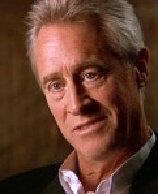 When atrocities like the My Lai
massacre are committed and covered up, it degrades us all.
When atrocities like the My Lai
massacre are committed and covered up, it degrades us all.
Larry Colburn was a door gunner with crew chief
Glenn Andreotta and Warrant Officer Hugh Thompson as pilot of a small
scout helicopter during a combat assault at the village of My Lai on
March 16, 1968. As murderous bloodlust unfolded on the ground below,
Thompson and crew confronted fellow GIs to save numerous civilians from
the fate of some 500 others that morning. Andreotta died in action a few
weeks later, but Thompson and Colburn were key witnesses in the
investigations and trials to follow. In this exclusive interview with
Vietnam magazine and VietMag.com, Larry Colburn talks about his
late friend Hugh Thompson, the My Lai massacre, the subsequent cover up,
investigations and trials, his journeys back to Vietnam and meetings
with survivors and the Hugh Thompson Foundation, which he formed after
Thompson's death in 2006.
How did you get to the 123rd Aviation Battalion?
When I got to Vietnam I was attached to a headquarters company. Friends
I had on the division level told me they were taking volunteers for the
123rd Aviation Battalion. The alternative was to be in an infantry unit,
and I was told it would be a good idea to attach to an aviation company,
better odds there. I would be there from December '67 to December '68.
You started out on an OH-23 scout helicopter?
When I first joined the company, the commander took the volunteers to
the flight line and showed us bullet holes in the aircraft and asked us
if we knew what they were. He wanted to give us some idea of what were
getting into. You felt pretty vulnerable in that little helicopter. Our
main job was to fly close to the deck, entice fire to get the enemy to
give up their position, mark it, suppress fire and get out of the
gunships' way. Like most 18-year-old males I was naïve, had no idea what
risks were. As I understand, that part of brain doesn't develop until
25.
On March 16, 1968, did you have any
expectations of serious action?
The pilots were briefed, if the crew was briefed it was by the pilot in
the aircraft on the way to the area. That morning, Hugh said, "This is
supposed to be a VC stronghold, but you know G2." Usually, when
intelligence said an area was hot, it wasn't, and visa versa. Hugh was
being jovial. With Hugh, usually the more tense the situation, the more
comical he would be.
Did you have any knowledge of who was being
inserted into My Lai that morning?
No, we had no knowledge of who they were, we just knew they were
Americans on the ground and we would have done anything for them. We
would have died for them. We were very protective of the men on the
ground.
What did you see when first flying over My
Lai?
We came in from altitude down to low level. That morning was clear and
as we came over a hilltop we saw a suspect in uniform with a pack,
carrying a carbine in the middle of a rice paddy. He looked up and saw
us and then took off for the tree line. Hugh said, "I'm going to take
him on the right," which meant he was my target. I may have clipped him
but he made it to the trees. That was the only enemy combatant we saw
that day.
By this time, Lt. William Calley's Charlie
Company was reaching My Lai?
Yes, and we were checking the perimeter as they were coming in and
starting the combat assault. As we got back on station, we saw a lot of
villagers leaving and figured that we may have dropped leaflets or had
fired some artillery in morning. Then again, it was a Saturday morning
and they were possibly going to market. It was women, children and
elders we saw. They were not running, but just slowly moving out of the
village. We thought that was good, that they would be out of the way. So
we continued our recon.
When did you see those particular villagers
again?
In about 10-15 minutes we were back to the same spot where we saw the
villagers on the road leaving. Now we saw them again, but they were all
lying on the road, dead or dying. We knew something seemed wrong. These
people appeared to be no threat at all, and we couldn't figure out why
they were fired on and killed as they were leaving the area.
Were you talking about this at the time?
Hugh was running scenarios through his head to figure it out. They
couldn't have been killed by artillery. It couldn't be gunships, they
weren't firing on people. Hugh alerted the low gunship as to what we had
seen on the ground. The only radio communication we had was with the low
gunship. They could communicate with the command craft that was flying
at altitude. As we flew around more, we started seeing small groups of
people dead or dying in other parts of the village.
You had no radio contact with the men on
the ground?
We had no direct radio contact with the men on the ground. We were the
closest and should have been able to communicate, but that's the way it
was structured. If we would have had direct contact, we could have told
them that these people are unarmed, no threat. Possibly we could have
stopped things earlier.
You still didn't understand what was
actually happening?
No. We even started marking the wounded with smoke, thinking the men on
ground would come assist them. When we would come back to those we
marked, we'd find they were now dead. We came to think we were
indirectly killing these people ourselves by marking them with smoke. We
couldn't come up with an explanation until Hugh marked a woman we saw
who had a chest wound and decided to just move back in a hover when we
saw a squad coming near. As we watched from about 15 feet off the
ground, back maybe 20 meters, we saw this captain approach the woman,
look down at her, kick her, step back and then blow her away. It all
crystallized in that moment. In unison, all three of us shouted, "You
son of a bitch!" That was Captain Ernest Medina.
That was a point of no return for Thompson?
When Hugh realized it was our people doing this killing, he knew he had
to take drastic measures. We came across a ditch, with probably 150 or
more people in it and the wounded trying to crawl out. There was a
sergeant standing by the ditch by himself. Hugh landed and ran over and
told the sergeant, "These are civilians, we got to help them out." The
sergeant agreed, telling Hugh he'd help them—"out of their misery." Hugh
continued to argue, said they were no threat, they had no weapons.
Finally, when the sergeant said OK, Hugh thought he'd convinced him and
got back in the helicopter and we pulled out. As we did, we heard
automatic weapon fire. Glenn shouted, "He's firing into the ditch
again!"
How did Hugh react when reason failed?
Hugh was furious, ready to do anything to save these innocent people.
Just then Glenn spotted some people in an earthen bunker, saw faces
peering out of the entry. We surveyed around the bunker and saw that
squad approaching. Hugh said: "These people are going to die. I'm not
going to let this happen, we've got to do something. Are you guys with
me?"
Any hesitation?
None. Glenn said, "If we are going to do something, we better do it
right now!" So Hugh lands right between the approaching squad and the
bunker. He left the aircraft in flight idle, as rotor blades can be
somewhat intimidating. He also wanted to be able to get out quickly if
need be. As Hugh jumped out, he told us to take our weapons down off the
bungee cords and take some belted ammo and backup weapons and set up a
little perimeter around the aircraft. He walked about 50 meters and
encountered the lieutenant who was leading the squad. He tried to
explain that these people appeared to be civilians, that we hadn't taken
any fire and there was no evidence of combatants in that area. The
lieutenant told him to mind his own business and get out of the way.
They were face to face, screaming at each other. Hugh came back to the
aircraft and because we had flight helmets on and the aircraft was
running, we had to literally put our heads together as Hugh shouted
instructions. He said: "They are coming this way. I'm going to go over
to the bunker myself and get these people out. If they fire on these
people, or fire on me while I'm doing that, shoot 'em!" Now Hugh really
had no idea who or what was in that bunker, could have been an AK47
waiting for him there. But he didn't even draw a sidearm as he walked up
to the bunker and motioned to the people to come out. Somehow they
trusted him and they came out. He kept the aircraft and himself in
between these people and the squad. We had thought there were two or
three, but there were about 10 in the bunker. At that point, Hugh
realizes he's got an aircraft that won't accommodate them. So he called
our low gunship, piloted by a friend of his, Dan Millans, and said:
"Danny, I need a favor. I want you to come down here and shuttle these
people out of here." And that's what happened, but at that he had to
make two trips. The high gun stayed in the air and circled.
Did the gunship crews know what was
happening on the ground before this?
The low gun probably did because they had visual and were communicating
with Hugh, and Hugh had been telling them what we'd been seeing, hoping
they were relating that up to the command craft that was flying above at
altitude.
How many men were in squad and were they
threatening?
There were probably 10 in the squad. They approached but because the
aircraft was at flight idle they tended to stay back a little. I know
it's great copy, but I've tried to correct the record many times: No one
pointed any weapons at anybody. When Hugh gave his order, I distinctly
remember pointing my weapon directly down at the ground, so there was no
question. Glenn and I were staring them down and watching to see how it
would unfold. I remember catching one of the soldiers' eyes and I waved
to him and he waved back. I thought Hugh would pull it off, when I saw
some pull their rucksacks off and leave it to the lieutenant to have it
out with Hugh. Remember, this was later in the morning approaching noon,
most of the killing had already been done.
Were you prepared to fire on the squad?
How could I ever be prepared for something like that? Would I have? I
guess that's the $64,000 question isn't it? I've mulled this over for
years. I don't know, at the time I thought about creating a diversion,
discharging my weapon in another direction. But I really didn't know
what was going to happen or how to react. Now, if I had known then what
I know now about some of the activity going on there, the rapes and
barbarism…. But still, who do you shoot? I don't know who did what. I'm
not judge, jury and executioner. I just thank God everybody kept their
cool and no one made any quick moves.
Could you have just reported this and left,
knowing you'd at least made an effort?
No, because the commander was on a different frequency. Hugh transmitted
what he could to the low gun in hopes that it would get up to the
commander and someone would make a decision to stop it. At some point
they finally did call for a cease-fire, but by then it was too late.
After evacuating the people, you thought
you could do more?
We went back to the ditch because we knew there were a lot of people
there who could have been saved. Glenn had a visual on some sort of
movement in the ditch, so Hugh landed, and Glenn and I got out. Glenn
went down into the ditch and found the boy that he had seen moving and
handed him up to me. We took him out of the area to a hospital and gave
him to a nun. Hugh told her he probably didn't have any family left.
Did you consider bringing gunships to ferry
out others from the ditch?
Except for the boy, it appeared the rest were already dead.
You found later that that wasn't true?
As the wounded tried to crawl out, they were fired on by someone who had
been left there to do just that. However, I've spoken to survivors on
different occasions who had been at the bottom of the pile. They waited
until the sun went down and they crawled out of that ditch.
When did you make your report of what
happened?
After we took the boy to Quang Nai, we went back to our base, and Hugh
Thompson and I reported to Colonel Oran Henderson.
Do you think most people realize there was
more than just the killing that was going on?
Probably not. In the Peers inquiry testimony, I believe there were 14
rapes that were reported. There was also testimony of absolute insanity.
They killed everything. Some soldiers even jumped on the water buffalos,
riding them around while trying to kill them with their bayonets. It was
a case of bloodlust.
Had you ever seen anything even approaching
this before?
It was an enemy tactic to blur the lines between combatants and
noncombatants. I'd seen civilians get in the way and unfortunately lose
their lives because of that. But to see people herded up like so many
animals, marched into a ditch and machine-gunned? No I'd never seen nor
heard of anything like that before, except in World War II. Hugh told me
that was what was going through his mind, he was thinking of Nazi
Germany, people digging trenches, forced to march into those trenches,
mass graves.
Thompson had a famous emotional outburst
upon returning to base?
I think he broke his flight helmet, he threw it down so hard. He was
saying: "I'll never fly again. This is not what I'm here for. This is
not how this military organization supposed to conduct operations. I'll
have no part of this, I'll tear these wings off and never fly again!"
Fortunately, people calmed him down before he reported to Colonel
Henderson. He didn't want to appear to be frantic; he wanted to be taken
seriously by Henderson.
Thompson wanted you to also make a report?
When Hugh asked me to come with him and report what had happened, he
said: "Just tell the truth. Exactly what you saw." Since we were sitting
shoulder to shoulder, we saw virtually the very same things. I walked in
and told Henderson we saw unnecessary killing of many civilians. He made
some notes on a legal pad and excused me and I left. He showed no
reaction at all.
Did you expect something would be done as a
result?
Yes. It was in their hands. And the people guilty of committing war
crimes should have been dealt with. At the same time, judging from
Henderson's reaction—he seemed almost nonchalant, like it was just
another day at the office. That same day, the cover up started.
Months later you were surprised with a
medal for action at My Lai?
Out of the blue, our unit was called out onto the tarmac for an awards
and decoration ceremony. I had no idea what it was about. I thought
someone else was getting recognition for something. It was unusual, the
only time it happened while I was there. All of a sudden I hear my name
called, I had no advance knowledge, no idea what was happening until
they pinned the Bronze Star with Valor on me. I read the citation and
thought what? "In the middle of a firefight…" I was an E4, what was I to
do? I said, "Thank you, sir," and went back to work. I didn't write Hugh
up for anything and he said he didn't write me up. We didn't know what
was happening. I believe Glenn got a Bronze Star too.
Was this part of the cover up?
It had to be. The conclusion Hugh and I came to was they were trying to
keep us quiet by giving us a phony award. But that was not to be the
case.
When did you start talking to
investigators?
I was back at Ft. Hood and my CO called me in, said I had a phone call.
It was Hugh and he told me that I would be getting orders to report to
Washington. He told me not to say anything to anybody, and just tell the
truth when I got there. When the orders came down, the CO called me into
his office and demanded to know what they were for. I looked at them and
the first thing I saw was, "Reason: to conduct necessary military
business." So that's all I would tell the CO. He started accusing me of
being with CID. He said you're a plant aren't you. I said I'm not really
at liberty to say. I enjoyed that.
At that point, no one had a clue beside you
and Hugh?
No. Hugh told me to keep my mouth shut and I did. We didn't talk about
it. There was some chatter since most of the people at Ft. Hood were
returnees, but no one really zeroed in on what was happening.
Did the word about what happened at My Lai
get around?
Those on station knew something about it but not many saw it up close
and personal except for the men on the ground and a couple of helicopter
crews. We didn't talk too much about it ourselves because we reported on
it and we were, frankly, preoccupied with the next mission. Of course
anyone thinking of making a career in the military probably pretended
they never heard anything.
Did you experience retaliation for what you
did that day, or for talking to Henderson?
No, but Hugh was sent on missions in his OH-23 with his back up another
OH-23—no gunships—into Dragon Valley, where there was rocket activity.
That seemed suicidal to me, going out with next to no backup or
firepower. That's when he crashed about five helicopters in five months.
I did hear that the men on the ground were told to pretend like it never
happened. Some were sent out into the field for 60-75 days straight, and
they started getting the feeling somebody was trying to get rid of them.
After My Lai, did you feel traumatized or
feel like you carried a huge burden?
At first, I just felt shock. To this day I can't remember exactly about
that day reporting to Henderson. I remember wearing the same fatigues
and they were pretty much covered with blood stains from carrying the
boy and being in that ditch. I think I may have been in shock to some
extent. After the initial shock, I think some sort of a defensive
mechanism kicked in.
What did you do after My Lai for the rest
of your tour?
I wanted to survive and get home. I flew in the 23 as a gunner through
that summer, then I asked about throwing my hat into ring for a gunship
where there was a little more armor and security. I stayed on gunships
for rest of my time in Vietnam.
Did you have a sense that what you had seen
at My Lai was and isolated incident or did you suspect similar
atrocities were happening elsewhere?
When you see something like that happen, with no negative repercussions,
you begin to think perhaps this is the method of operation. I think Task
Force Barker's intent was to create panic and drive the enemy forces out
of the area. There could be a reason for doing it, or there could have
simply been a complete breakdown in leadership. When the officers take
part in it, it just escalates things. When you see your lieutenant or
captain initiate these things, some enlisted men on the ground are more
likely to do the same thing. But remember, at My Lai only about a third
of the men participated in the massacre, but no one else tried to stop
it.
Glenn Andreotta was killed just a few weeks
after My Lai?
Yes. I was on the backup team that day and we went out to try to
retrieve the bodies. Glenn took a .51-caliber in the head, he was dead
before he hit the ground.
When you testified in Washington for the
Army investigation led by General William Peers, did you feel they were
after the real story?
I flew from Ft. Hood to give testimony in the basement war room of the
Pentagon. I knew General Peers had gotten in touch with Hugh and took
him back over to the scene of the crime. Hugh was the general's personal
pilot. It was fresh enough that things hadn't changed much. He was very
helpful to General Peers and it seemed like he wasn't just going through
the motions, it was like he really wanted to know what happened. I felt
that my testimony validated Hugh's, and that was why it was important.
So you were encouraged at that point?
I was encouraged in that there was an investigation going on and they
were going after some people in a big way. I was hoping there would be
justice, but what did it achieve? Everybody walked. All of the
investigations led to nothing, Hugh and I felt like all three trials
were just window dressing. Nobody would be held responsible.
Before the story broke, did you or Hugh
consider going public with the story?
No. Particularly because of the Peers and the IG investigations, I
thought there were people sincere about upholding the Uniform Code of
Military Justice.
Did you know when the story was about to
break?
I was back in Mount Vernon, outside Washington, and I got a call from my
mother saying there were some people at the house who wanted to talk to
me. She asked me what it was about, and I said I wasn't sure. I got
there and I'll never forget my mother taking me into the kitchen and
telling me if I didn't want to tell these people anything, I didn't have
to. I don't know how they found me, but I gave a brief interview, and it
appeared with the Life magazine photo spread in December 1969.
How did you feel about that?
I always thought the American people deserved to know what was going on
and I just thought it was good the public got a color photo layout of
what happened at My Lai.
You were a witness for the prosecution in
the trials that followed?
By then I was a civilian and was trying to attend college on the GI
Bill, but I kept getting subpoenas. I testified in the trials of
Henderson, Medina and Calley. When they started convicting people, I
thought, now this is how it should unfold. But, after going through the
process and seeing the ultimate outcome, I wasn't really surprised, but
I was disillusioned. The outcome of the trails was disgraceful, and Hugh
and I saw that it was a sham. We'd done what we could. I lost faith in
the whole military organization and wanted to put it all behind me.
You and Hugh had a pretty low profile
during and after the trials?
We were told by the prosecuting attorneys to keep our mouths shut, and I
didn't advertise the fact I was at My Lai.
How did you and Hugh reconcile what you
knew happened with the outpouring of public support for Calley and his
men?
When the American people responded as they did in defense of Calley, it
was really hard, especially for Hugh. It was absurd, but you have to be
willing to pay the price. Just because you tell the truth, it doesn't
mean everything always come up roses. It was denial on the part of the
public. Hell, I didn't want to believe it, either, but I had no choice
because I saw it.
Does it worry you that it was, and remains,
in our capacity to excuse or rationalize an atrocity like My Lai
committed by Americans?
I think it is deception, and that remains constant today. If you are an
American who thinks all of our foreign policy and actions over the years
is as pure as the driven snow, well that is just not reality. It has
turned me into a cynic philosopher. We are inundated with information
but we are not very well informed. People should realize that when
atrocities are committed like this and covered up, it degrades us all.
Were you vilified or the target of death
threats the way Hugh Thompson was?
Since Hugh's death, I have become the recipient of some of the hate mail
he used to get. I have come to understand him more now than I did when
he was here. I now know why he wanted me to come with him to events.
We've been accused of many things, of being traitors. It can be
disturbing. But one of things the most infuriating is being called a
whistleblower, as if we went and ratted someone out. That is completely
false, there was no backstabbing going on—we were right in their face at
My Lai, we were ready to confront those people then and there. And we
did, the best we could.
You are not comfortable with being called a
hero, either?
We never thought we were heroes. That is what other people say. I know
who I am, I'm no hero, I was scared shitless most of the time. When it
was all happening, the feeling I had was, if this is how I'm going to
die, I'm OK with it. It was so blatantly wrong what they were doing, we
had no choice, we had to do what we did.
What about those who didn't stand up to
evil in their midst?
I've tried to put myself in their position, tried to empathize. What
would I have done if I were a man on the ground? There was a guy at the
ditch with Calley, shooting people not yet dead. He threw his weapon
down and said he wasn't going to do it. Calley pointed his weapon at him
and threatened him with a court-martial. This fella stood up and said:
"Fuck you. Court-martial me," and he left his weapon and walked away.
You've got to love this guy.
On a trip back to My Lai in 2008, Larry
Colburn embraces Do Hoa, the boy he helped rescue from a ditch in 1968,
and his family. (copyright Michael Bilton)
So, what do you make of Calley's "apology"
last year?
Well, it wasn't really an apology, was it? He just lateraled the ball to
Medina. I imagine he wants to get right with God; he's not a young guy
anymore. Interestingly, there are those toying with the idea of inviting
him to make the trip back to My Lai to ask for the people there for
forgiveness. Every time I've been back there, the survivors ask me, "Why
don't the men who committed the atrocities come back and ask for
forgiveness so that we might forgive them." They're Buddhists you know,
they can forgive, put it behind them and carry on. That's what they want
to do.
You've been back a few times?
Hugh and I went in 1998 with 60 Minutes, just after we were given
the Soldiers Medal. You can imagine the emotions that surfaced. Hugh
struggled, but you see the people who survived are still in the same
village, doing what they do. It is amazing to see the strength of the
human spirit. In 2001 we went back and were reunited with the boy in the
ditch. I went back in 2008 for the 40th anniversary.
Did the boy have a recollection of March 16, 1968?
At the time, I figured he was 3 or 4 years old, he was tiny. But it
turns out he was 8. He is still tiny, but he remembers everything. Hugh
and I were skeptical in '01, so we asked him a lot of questions and he
told us things only he could have known. He remembered Glenn picking him
up, seeing me in the ditch. He remembered how Glenn would put him down
and pick him back up as he checked on other victims in the ditch. Only
he would have known that. And it turned out, after we dropped him off
with the nun at the hospital, he didn't stay 24 hours. At 8 years old,
he made his way about 10 miles through the jungle by himself to the
village. He had to make sure his mother, brother and sister, killed in
the ditch, were buried properly.
You saw him again in 2008?
When we first saw him in 2001, he said all he wanted was to get out of
Ho Chi Minh City where he worked in a factory at low wages, and get back
to village and find a wife. When I arrived at My Lai in 2008, no one
knew where he was. They tried to make arrangements to get him there, but
couldn't find him. Then, as I was in this crowd, I turned around and
there he was—with his beautiful wife and new baby boy. It was like he
dropped out of the sky. That's what keeps me going.
What drove you to create the Hugh Thompson Foundation?
I thought that from a historical perspective, something needed to be in
place so that when I'm gone, what Hugh did at My Lai won't just fade
into obscurity. People need to know who Hugh Thompson was, what he did
and why he did it. We also want to carry on Hugh's passionate advocacy
for all veterans, not just Vietnam vets. He retired as a VA counselor in
Louisiana. He knew the importance of getting people who are struggling
the attention they need so they can transition back into civilian life
and deal with problems, be they physical or emotional.
And you want to instill the spirit of Thompson in others.
We want to recognize people in the military and all walks of life who
really make difficult decisions the way Hugh did. We are developing the
concept of a Hugh Thompson Medallion to do that.
The My Lai story and Hugh Thompson's role in it is really important, but
do you find most people are unaware of it?
Even though the military has admitted to the massacre, many people are
not capable of acknowledging and processing that information. It is
denial, a refusal to believe our young men could run amok the way they
did. Likewise, what Hugh did has been ignored or glossed over in history
texts, much the same way the incident has been.
You and Hugh had the opportunity to tell your stories to young military
officers.
I have accompanied Hugh when he has spoken at West Point, the Naval and
Air Force Academies, to the Red Cross, in Norway, Australia and
elsewhere. He has had an impact on many young minds in the military. But
I still don't think the topic really gets the exposure it really needs.
How do you think your story, of an event now long in the past, can make
a difference?
Whenever I felt discouraged about things, Hugh would remind me that if
we get through to just one person, it's worth it. That one person will
go on to tell 10 other people. After Hugh died, I was invited to
Annapolis to speak one more time. One of the instructors told me a story
that he wished Hugh could hear. Two young infantrymen in Iraq came upon
a situation where a number of civilians were questionable and the men
weren't sure whether to engage or not. In the midst of it, they had a
conversation like this: "Remember those old guys from Vietnam and what
they told us back at Annapolis?"
Anyway, they remembered our story
about My Lai, and instead of just lighting up a target, they took the
time to analyze and study the situation. And it turned out it was a good
thing that they did. Innocent people didn't die that day They didn't
just fly off the handle and engage a target that was borderline. If Hugh
knew that, it would have made everything he went through worthwhile for
him. He's saved lives again.
How do you intend to spread the word about the foundation?
I hope to take as many speaking engagements as I can. I have a few lined
up at some universities this year. I'm giving interviews and working
with students. We hope to link up with other organizations and grow some
legs.
You must have had some post-traumatic stress after your experience in
Vietnam.
I'm Irish so I'm to suffer. But I've had my episodes. You know, you
think everybody feels you and you can ignore your own symptoms. I give
credit to my sister Mary, who saw my condition when I came home. She
enticed me to move to east Oregon, near a ski area. If there was
anything that was cleansing for me that was it. I've had PTSD issues for
42 years.
Did you get help?
When I moved to the East Coast, I stopped at a VA hospital and had a
list of things I thought I should get out. I waited in the hospital
waiting room for about four hours to see a psychologist. The best
therapy I got was in those four hours and seeing the people who were so
broken physically. When I finally got in to see the guy, he was a major,
he wouldn't make eye contact as I read my list. I told him everything
and he didn't know how to respond, he had no idea how to deal with it.
He just said I was a prime candidate for PTSD. So he gave me
prescriptions for several psychotropic drugs. Well, I took the
prescriptions, ripped them up into little pieces and walked out.
You and Thompson must have been good mutual support.
We'd talk a lot and if I was stressing I could always pick up the phone
and Hugh could always talk me down. He struggled too. When he had a
heart attack he said he would slow down, but he didn't…
So, how did you guys feel when you got the Soldiers Medals in 1998?
Like the trials, it was forced. The military was forced after an
eight-year letter writing campaign by David Egan, a professor at Clemson
University, and a businessman named William Cavanaugh. They had been
writing to the Pentagon for years about Hugh, totally unbeknownst to
Hugh. They got some people to listen, and then there were others in the
Pentagon trying to put it at the bottom of the stack. Ultimately, it was
a pubic relations move, they had to give the medal. They didn't want to.
At first, they only wanted to give it to Hugh at a private ceremony.
Hugh said, "No, let's do it at the Wall." They said no, the weather
might be bad or something. Hugh said that was OK, because that was the
appropriate place. And Hugh said, "What about my crew?" They said they
didn't have any intention for awards of the crew. "Well," Hugh told
them, "if you just give it to me I'll take the medal, with a camera
crew, to the first men's room I can find and I'll flush it down the
toilet." This is a colonel he is talking to. "Oh, no, Mr. Thompson, let
me see what we can do," he said. It went on like that for another year
and half until finally they agreed to award medals to all of us.
Were you glad you got it?
If it's not sincere, it doesn't mean anything. It was a dime short and
day late for Hugh, 30 years after the fact—after causing him grief—then
they're going to call him a hero? I have mine put away somewhere, but I
think Hugh threw his away one night.
Many fellow GIs still don't think you did the right thing?
There are those hardcore people who do still say we shouldn't have told
the truth, that we should have covered for those guys in the field; that
we didn't know what it was like on the ground. Sorry that's not what we
did and I don't care what they think of me. We loved those guys in the
field. Our purpose for being there was to protect them. If people have
some confusion about that, that's their problem. It's like the line from
the movie No Country for Old Men when the Vietnam veteran played
by Josh Brolin, who responds to another guy who introduced himself and
says he was "in 'Nam" too: "Oh, you were in Vietnam too. What's that
make you, my buddy?" So, just because guys served in the same theater
doesn't necessarily mean we are all that close.
Ever reflect about how you are part of an event of such historical
significance?
I'll always know that we did was morally right, we did what we could to
help people who could not defend themselves. I think that is probably
what has helped me get through it all. As far as a place in history,
that's not something I dwell on. I'm a garden-variety human being and
that's all there is to it. I was always comfortable as the sidekick and
enjoyed the time with Hugh. Now that the dynamics have changed with Hugh
passing, I understand now how difficult it was for him, carrying it
around in his gut, alone.
For more information about the
Hugh Thompson Foundation, visit
www.designaire.com/HughThompson